
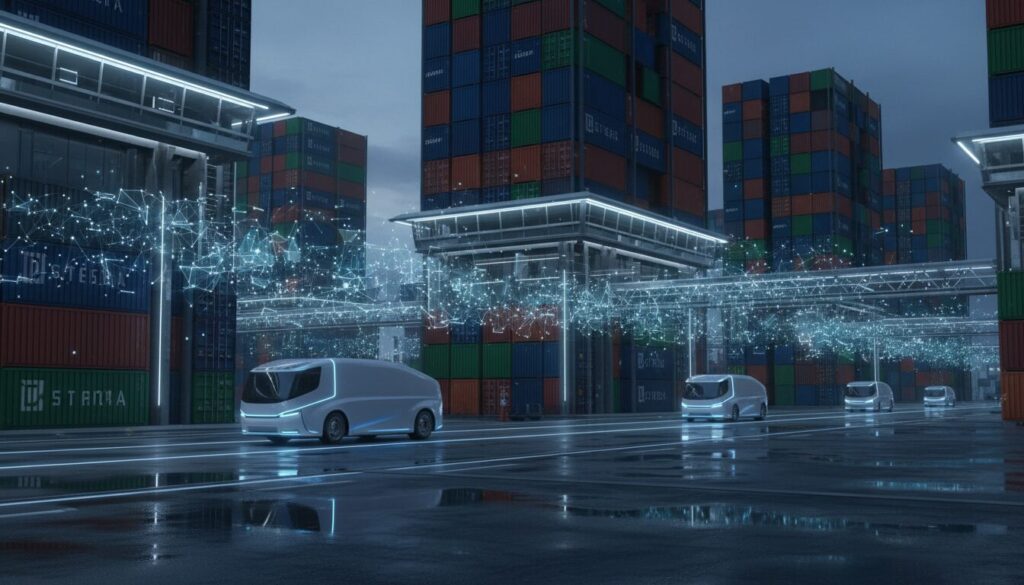
The era of solving supply chain congestion solely by pouring concrete is officially ending. The United States Department of Transportation (DOT) has signaled a definitive pivot from physical capacity expansion to digital synchronization. With the issuance of a Request for Information (RFI) to establish a National Strategy for Transportation Digital Infrastructure (TDI), the government is acknowledging that the next great leap in logistics efficiency will be powered by code, not just asphalt.
For logistics executives, this is not merely a bureaucratic update; it is a foundational shift in how the national grid will operate. The initiative aims to unify data across rail, maritime, and road networks using Artificial Intelligence (AI) and Vehicle-to-Everything (V2X) communication. This move parallels global trends where state-level intervention is becoming necessary to standardize the chaotic digital landscape of modern supply chains.
This analysis dissects the DOT’s new vision, its reliance on “federated” data sharing, and what logistics leaders must do before the March 6 public comment deadline.
The Facts: DOT’s Digital Pivot
The DOT’s Advanced Research Projects Agency-Infrastructure (ARPA-I) is spearheading this initiative. The core premise is that the U.S. supply chain suffers less from a lack of physical space and more from a lack of digital cohesion. Disparate systems—port operating systems, carrier TBMs, and municipal traffic grids—do not talk to each other, creating “digital friction” that manifests as physical delays.
The TDI strategy focuses on creating a digital layer over the physical infrastructure. This involves high-priority technologies including V2X (enabling trucks to talk to traffic lights), AI-driven predictive analytics, and the integration of autonomous systems.
Executive Summary: The TDI Strategy
| Component | Description |
|---|---|
| Objective | Establish a unified digital framework to synchronize road, rail, and maritime freight. |
| Key Technology | AI, V2X (Vehicle-to-Everything), Autonomous Systems, Edge Computing. |
| Data Model | Federated Data Sharing: Connecting legacy/proprietary systems without centralizing data storage. |
| Security | Adoption of the NIST Cybersecurity Framework to secure goods-movement data. |
| Urgency | Public comments on the strategy are due by March 6. |
| Goal | Shift focus from physical expansion to “Digital Infrastructure” to cure global supply chain bottlenecks. |
Industry Impact: From Silos to Synapses
The implications of the TDI strategy extend across every node of the supply chain. The government is effectively trying to build the internet of logistics—a standardized protocol where data flows as easily as the trucks themselves.
1. For Carriers and Fleet Operators
The immediate impact lies in V2X integration. The DOT envisions a future where freight vehicles are in constant communication with the infrastructure they traverse.
- Predictive Routing: Instead of relying on static GPS data, trucks could receive real-time signal phase and timing (SPaT) data from traffic lights, optimizing speed to hit green lights and reduce fuel consumption.
- Autonomy Readiness: The TDI creates the digital “roads” required for autonomous trucks to operate safely at scale. As discussed in our previous analysis, the technology for autonomy is maturing, but the infrastructure is lagging. This strategy aims to close that gap.
See also: Driving the Autonomous Supply Chain: Are We There Yet? Guide
2. For Warehousing and Port Operations
The most significant bottleneck in recent years has been the interface between the port/yard and the open road. The TDI aims to eliminate the “black holes” of data visibility that occur when cargo transfers from a ship to a drayage truck or enters a distribution center yard.
- Federated Visibility: By connecting proprietary port systems with carrier data, a warehouse manager could know precisely when a container clears customs and exits the terminal gate, without logging into three different portals.
- Yard Synchronization: This digital layer directly addresses the blind spots that plague yard management. If the digital infrastructure can signal inbound capacity, warehouses can optimize dock scheduling dynamically.
For context on current challenges in this area, refer to our recent report: Yard Bottlenecks Impact 2026 Supply Chains.
3. For Shippers and BCOs
Beneficial Cargo Owners (BCOs) stand to gain the most from the “federated” approach. Historically, shippers have been hesitant to share data due to competitive fears. The federated model allows data to be queried without being centralized or exposed, theoretically protecting trade secrets while enabling systemic efficiency.
LogiShift View: The “So What?”
The DOT’s move is a belated but necessary recognition that data interoperability is a public good, much like the interstate highway system.
The “Federated” Distinction
The critical insight here is the choice of a federated model. The DOT is explicitly avoiding a “central database” approach, which would be doomed to fail due to industry mistrust.
- Analysis: A federated model means data stays where it is (on the carrier’s server, in the port’s cloud), but standard APIs allow authorized parties to ask questions of that data. This is the only viable path to getting fierce competitors (e.g., UPS and FedEx, or Maersk and MSC) to participate in a unified ecosystem.
Global Context: The Race for Efficiency
The U.S. is not operating in a vacuum. Other nations are aggressively funding digital logistics backbones to secure their economic interests. For instance, Japan has recently allocated massive budgets to logistics efficiency to combat labor shortages and 2024 compliance crises.
- Comparative Insight: While Japan is using direct budget allocations to subsidize hardware and system upgrades, the U.S. approach is focused on setting the standards (soft power). Both aim for the same goal: a resilient, high-speed supply chain. The U.S. TDI strategy essentially forces the private sector to upgrade by setting new rules of engagement.
See also: Japan’s 2026 Logistics Budget: A Global Efficiency Blueprint
The Cybersecurity Double-Edged Sword
By mandating the NIST Cybersecurity Framework, the DOT is raising the barrier to entry.
- The Risk: Small and mid-sized carriers or warehouses running legacy software on on-premise servers may find themselves locked out of the “Digital Infrastructure” if they cannot meet these security standards. We predict a wave of M&A activity as smaller players are acquired by tech-forward aggregators simply to meet digital compliance.
Takeaway: Strategic Next Steps
The RFI deadline is March 6, meaning the window to influence this strategy is closing. However, the trajectory is clear regardless of the specific details: the digital handshake is becoming as important as the physical handover.
Companies should take the following actions immediately:
-
Audit for Interoperability:
Review your current Tech Stack (TMS, WMS, ERP). Is your data siloed, or is it API-ready? If the DOT establishes a standard for V2X or freight data exchange tomorrow, would your systems be able to plug in? -
Evaluate NIST Compliance:
Cybersecurity is no longer an IT problem; it is an operational license. Start aligning your data practices with the NIST framework now, as it will likely become a prerequisite for bidding on government contracts or integrating with major ports. -
Invest in “Edge” Readiness:
The focus on V2X and drones implies that data processing will move to the “edge” (the truck, the forklift, the drone). Invest in hardware that supports edge computing rather than relying solely on centralized cloud processing. -
Engage with the RFI:
If your business relies on proprietary data as a competitive moat, you must participate in the comment period. Ensure the “federated” definitions protect your interests while allowing for the efficiency gains the industry desperately needs.
The Bottom Line: The DOT’s TDI strategy confirms that the future infrastructure of logistics is invisible. The winners of the next decade will not be those with the most trucks, but those with the most synchronized data.