
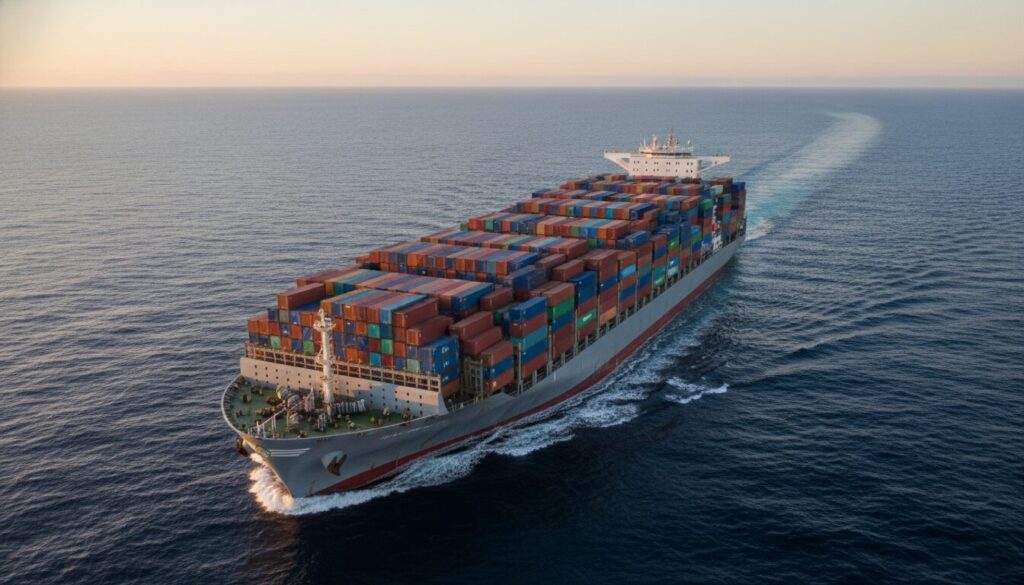
The beginning of 2026 has presented global supply chain executives with a familiar yet paradoxical challenge. As January unfolded, the logistics industry witnessed a sharp, aggressive surge in pricing on the Transpacific trade lane. Driven by a confluence of Lunar New Year (LNY) pre-holiday demand and aggressive General Rate Increases (GRIs) by carriers, spot rates have climbed significantly.
However, unlike the pandemic-era surges driven by insatiable demand, the Transpacific ocean rates spike to start 2026 is occurring against a backdrop of macroeconomic softening. With volume forecasts for the year projected to contract, this rate hike represents a critical volatility test for innovation leaders and strategy executives. It highlights the disconnect between short-term carrier tactics and long-term supply/demand fundamentals.
This article dissects the anatomy of this spike, analyzes the global ripple effects, and examines how leading enterprises are navigating this “phantom peak” through data-driven resilience.
Why It Matters: The Volatility Paradox
For the C-Suite, the sudden escalation in shipping costs in early 2026 matters not because it signals a booming economy, but because it threatens margin stability in a year where efficiency is paramount.
The data is stark. In early January 2026, spot rates from Asia to the US West Coast jumped to $2,617 per FEU, a 22% week-over-week increase and a 30% rise compared to mid-December 2025. Similarly, Asia-US East Coast rates climbed to $3,757 per FEU, marking a 12% weekly increase.
This volatility matters for three primary strategic reasons:
- Budgetary Variance: Logistics budgets set in Q4 2025 based on “soft market” predictions are immediately being tested.
- Inventory Valuation: With volumes projected to fall 10% YoY due to inventory overhang, retailers are sensitive to adding landed cost to goods that may sit in warehouses.
- Carrier Discipline: The spike demonstrates that despite overcapacity, carriers retain the ability to manipulate short-term supply through blank sailings and GRIs to artificially inflate floors.
Global Trend: Analyzing the 2026 Transpacific Landscape
The current landscape is defined by a tug-of-war between immediate operational pressures and long-term economic cooling. The trend is not uniform; it impacts the US, Asia, and Europe differently, creating a complex matrix for global logistics planners.
The Asian Export Engine: The Lunar New Year Rush
The primary driver of the January 2026 spike is the traditional rush preceding the Lunar New Year. Manufacturing hubs in China and Vietnam accelerated output to clear orders before factory shutdowns.
However, the 2026 dynamic differs from previous years. Carriers, anticipating the soft year ahead, implemented aggressive capacity management strategies earlier than usual. By blanking sailings (canceling voyages) in late December, they artificially tightened space, allowing the GRIs to stick despite the lack of fundamental long-term demand growth.
The US Import Market: Inventory Overhang
In the United States, the demand side tells a different story. Major importers are grappling with “inventory overhang”—a legacy of over-ordering during previous disruptions.
- West Coast Preference: The 22% spike in West Coast rates (vs. 12% on the East Coast) indicates a shift back to faster transit times to meet precise inventory windows, avoiding the longer transit times of the Panama or Suez routes.
- Volume Contraction: The forecast for 2026 predicts a 10% year-over-year decline in overall volumes. This suggests that once the LNY rush subsides, the floor could drop out of the market, returning leverage to shippers.
Geopolitical Ripples: The Venezuela Context
While the Transpacific is the focus, global connectivity means executives must watch peripheral disruptions. A strike at Venezuela’s La Guaira port occurred simultaneously with the Asian rate spike.
While analysts predict minimal global ripple effects from the Venezuelan strike, it serves as a reminder of the fragility of node-based networks. In a soft market, such disruptions are absorbable; in a tight market, they are catastrophic. The current market’s ability to absorb this strike confirms the underlying “softness” despite the Transpacific rate hike.
Data Snapshot: The 2026 Rate vs. Volume Disconnect
The following table illustrates the divergence between immediate pricing actions and the broader volume outlook for 2026.
| Metric | January 2026 Status | Comparison (WoW / YoY) | Strategic Implication |
|---|---|---|---|
| Asia-USWC Spot Rate | $2,617 / FEU | +22% WoW | Carriers effectively managing short-term supply. |
| Asia-USEC Spot Rate | $3,757 / FEU | +12% WoW | East Coast heavily impacted, but less volatile than WC. |
| 2026 Volume Forecast | Projected Down 10% | -10% YoY | Long-term bargaining power remains with Shippers. |
| Carrier Capacity | High (New Deliveries) | +8% Supply Growth | Structural overcapacity will pressure rates post-Q1. |
Case Study: How Target Corp Navigates the “Phantom Peak”
To understand how to navigate the Transpacific ocean rates spike to start 2026, we look to Target Corporation and their evolution in supply chain strategy. Following the inventory gluts of 2022 and 2023, Target revamped its logistics approach, moving away from a “Just-in-Case” model toward a “Flow” model.
The Challenge
Target faced the same market conditions as competitors in January 2026: a sudden 30% rise in shipping costs for goods needed for the Spring season, compounded by a need to clear existing inventory without bloating the balance sheet.
The Strategy: Precision Flow and Origin Management
Instead of reacting to the spot market spike, Target leveraged a strategy focusing on upstream visibility and diversified entry points.
-
De-consolidated Ordering:
Target utilized their “flow centers” strategy. Rather than shipping massive bulk orders to central distribution centers (DCs) during the peak spike, they used predictive analytics to break down shipments. High-priority goods were routed via faster services (accepting higher rates but for lower volume), while replenishment stock was held back at origin consolidation centers in China. -
Contract Compliance Leverage:
By committing to consistent volumes throughout the sluggish Q4 2025, Target enforced strict allocation clauses in their contracts. While spot rates hit $2,617, Target’s blended contract rates likely remained significantly lower, protected by volume commitments made during the “soft” outlook negotiations. -
Port Diversification:
Target has heavily invested in diversification, utilizing ports like Tacoma and Norfolk to bypass potential congestion or aggressive pricing hubs at LA/Long Beach during the spike.
The Result
While smaller competitors were forced to pay the $2,600+ spot premiums to get goods on board before LNY, Target successfully:
- Protected Margins: By relying on contract allocation, they avoided the 22% WoW spot increase for 80% of their volume.
- Inventory Health: The volume decline projected for 2026 (-10%) aligned with Target’s goal of leaner inventory. They did not chase capacity; they matched shipping strictly to consumer demand data (Point-of-Sale).
Key Takeaways for Logistics Leaders
The Transpacific ocean rates spike to start 2026 offers critical lessons for the remainder of the year. The volatility is a signal, not a trend.
1. Distinguish “Technical” Spikes from “Fundamental” Demand
The January surge was technical—driven by carrier supply manipulation (GRIs/Blank Sailings) and calendar events (LNY). It was not driven by consumer consumption growth. Strategies must differ for each.
- Action: Do not panic-buy capacity for Q2/Q3 based on Q1 spikes. The macro data (10% volume drop) suggests rates will fall.
2. The Power of Index-Linked Contracts
Shippers utilizing index-linked contracts with “floating” mechanisms may have suffered during the spike. However, those with fixed-rate contracts with strong “No Roll” clauses benefited.
- Action: Review 2026 contract structures. Ensure allocation protection is prioritized over the absolute lowest base rate.
3. Inventory Decoupling
The projected volume drop is due to inventory overhang. Success in 2026 relies on decoupling shipping decisions from production output.
- Action: Implement “Origin Management” services. Hold inventory closer to the factory (where storage is cheaper) and ship only what the demand signal confirms, effectively bypassing volatility peaks.
4. Digital Twins for Scenario Planning
Companies using digital twins of their supply chain could simulate the impact of a $600/FEU increase versus the cost of holding inventory for 3 weeks.
- Action: Invest in predictive logistics platforms (e.g., Project44, control towers) that visualize cost-to-serve in real-time.
Future Outlook: Beyond the Spike
As the industry moves past the Lunar New Year and into Q2 2026, the Transpacific ocean rates spike to start 2026 will likely be viewed as a temporary anomaly rather than the new normal.
The “Capacity Tsunami”
The defining factor for the rest of 2026 will be the massive influx of new container vessel capacity ordered during the pandemic boom years. These ships are hitting the water throughout 2026.
- Impact: Supply will outstrip demand significantly. The 10% volume drop combined with an 8-10% capacity increase will create immense downward pressure on rates.
Strategic Renegotiation
By May 2026 (traditional contract season start for Transpacific), the leverage will shift dramatically back to shippers.
- Prediction: Expect carriers to struggle to maintain the $2,000/FEU floor. We may see aggressive spot discounting return by summer.
The Geopolitical Wildcard
While the Venezuela strike had minimal impact, the interconnectedness of global trade remains the biggest risk. Supply chain resilience in 2026 is not about securing space (there is plenty); it is about securing reliability.
In conclusion, the early 2026 rate spike is a warning shot regarding carrier discipline, but the macroeconomic reality of reduced volumes will ultimately dictate the year’s narrative. Innovation leaders should stay the course, leverage data to avoid spot market panic, and prepare for a buyer’s market in the latter half of the year.