
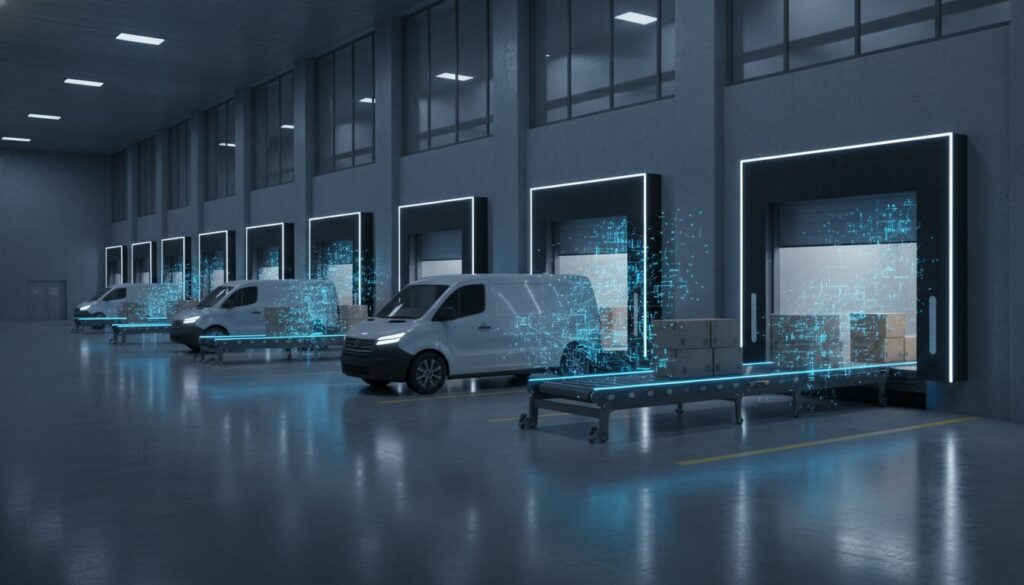
For logistics executives and supply chain innovation leaders, the final stretch of the supply chain has historically been a black box. The last mile is notoriously the most expensive, complex, and carbon-intensive leg of the entire delivery process. However, the paradigm is rapidly shifting from manual dispatching and siloed carrier management to AI-driven, real-time ecosystem orchestration.
A clear indicator of this shift is the recent acknowledgment of US-based delivery fulfillment platform OneRail, which has been recognized as a Representative Vendor in Gartner’s 2025 Market Guide for Last-Mile Delivery Technology for the third consecutive year. By leveraging artificial intelligence to orchestrate diverse carrier networks, OneRail highlights a massive global transformation. This article explores the current global last-mile ecosystem, analyzes the OneRail success story, and provides actionable insights for global strategy executives aiming to build resilient supply chains.
Why It Matters: The Last-Mile Complexity Crisis
In today’s borderless economy, supply chain resilience is no longer optional; it is the fundamental baseline for enterprise survival. The last mile often accounts for up to 50% of total shipping costs. Rising consumer expectations for same-day delivery, precise tracking windows, and sustainable shipping methods have pushed traditional logistics networks to their breaking point.
Global supply chains face overlapping pressures: a chronic shortage of commercial drivers, stringent environmental regulations in metropolitan areas, and unpredictable geopolitical disruptions that trickle down to local inventory availability. To navigate this complexity, logistics leaders can no longer rely on single-carrier strategies or rudimentary routing software. The modern logistics landscape demands a unified, technology-agnostic ecosystem capable of seamlessly integrating internal fleets, third-party logistics (3PL) providers, and independent couriers.
Global Last-Mile Trends: Regional Strategies and Innovations
While the challenge of the last mile is universal, the strategies employed to conquer it vary dramatically across North America, Europe, and Asia. Innovation leaders must understand these regional nuances to deploy effective cross-border supply chain strategies.
North America: Fragmented Networks and Heavy Goods
In the United States, suburban sprawl and vast geographic distances define the last-mile challenge. E-commerce growth has outpaced the capacity of major national carriers, forcing retailers to diversify their carrier mix. Retailers are increasingly utilizing regional parcel carriers, crowdsourced gig-economy fleets, and their own captive assets.
Furthermore, North America is seeing a massive surge in the demand for specialized logistics, particularly for big and bulky items like furniture and construction materials. Consumers now expect the same real-time visibility for a refrigerator as they do for a book.
See also: Home Depot Tracking: Revolutionizing Big & Bulky Logistics
Europe: Sustainability and Out-of-Home Infrastructure
The European logistics theater is heavily dictated by aggressive environmental legislation and dense, historic urban centers. Low Emission Zones (LEZs) across major cities like London, Paris, and Madrid restrict the type of vehicles that can perform deliveries.
To combat congestion and reduce carbon footprints, European logistics strategies heavily favor Out-of-Home (OOH) delivery networks, such as parcel lockers and Pick-Up/Drop-Off (PUDO) points. This consolidation significantly lowers the cost per delivery and ensures near-perfect first-time delivery success rates. The massive investments in this infrastructure highlight a strategic pivot away from traditional to-the-door models.
See also: FedEx & InPost: A $9.2B Last-Mile Innovation Case Study
Asia-Pacific: Hyper-Density and Q-Commerce
In Asian megacities, extreme population density and hyper-competitive consumer markets have given rise to Quick Commerce (Q-commerce), where delivery windows are often measured in minutes, not days. This region relies heavily on agile, two-wheeled transportation networks and dynamic micro-fulfillment centers embedded deep within residential zones. The sheer volume of transactions requires highly advanced, algorithmic dispatching capable of processing thousands of permutations per second.
Comparative Overview of Global Last-Mile Strategies
| Region | Primary Challenge | Dominant Strategic Focus | Key Technology Enabler |
|---|---|---|---|
| North America | Geographic sprawl, carrier capacity shortages | Carrier diversification, heavy goods visibility | Multi-carrier orchestration platforms, AI dispatch |
| Europe | Urban congestion, strict emission mandates | Out-of-Home (OOH) networks, EV fleet transitions | Route optimization, consolidated delivery software |
| Asia-Pacific | Hyper-density, ultra-fast delivery expectations | Micro-fulfillment, 2-wheel localized routing | Dynamic real-time algorithmic dispatching |
OneRail Innovation Case Study: Orchestrating the Final Mile
Recognizing the fragmentation of global delivery networks, technological innovators have stepped in to bridge the gap between enterprise shippers and localized logistics providers. US-based OneRail serves as a prime case study of how intelligent technology can tame last-mile chaos.
Gartner Recognition and Market Positioning
For the third consecutive year, OneRail has been named a Representative Vendor in Gartner’s 2025 Market Guide for Last-Mile Delivery Technology. This repeated recognition underscores a vital industry truth: the future of logistics belongs to orchestration platforms, not just fleet operators. Gartner’s analysis repeatedly points toward a growing enterprise need for solutions that can seamlessly connect disparate delivery nodes into a single, visible, and controllable dashboard.
The OmniPoint Platform Architecture
At the core of OneRail’s success is its OmniPoint platform. Unlike traditional Transportation Management Systems (TMS) that primarily focus on middle-mile freight, OmniPoint is purpose-built for the nuances of the last mile.
The platform operates by integrating a retailer or distributor’s internal fleets, local courier services, and global 3PL partners into a unified, real-time ecosystem. When an order is placed, the system evaluates millions of data points—including package dimensions, delivery windows, traffic patterns, and real-time courier availability—to automatically match the delivery with the most efficient and cost-effective carrier.
Achieving 98.6% Enterprise Delivery Reliability
The most striking metric from OneRail’s deployment across enterprise clients is its achievement of a 98.6% on-time delivery rate at scale. In an industry where weather patterns, vehicle breakdowns, and traffic accidents routinely derail delivery schedules, achieving near-perfect reliability requires moving from reactive management to predictive intervention.
This level of performance is driven by AI-powered optimization. The machine learning models within the platform continuously learn from historical delivery data, refining their carrier selection logic. If a specific regional courier consistently struggles with on-time performance during heavy rain, the system automatically deprioritizes them during inclement weather, routing the package to a more reliable alternative without requiring human intervention.
Automated Exception Management Protocol
Logistics executives understand that exceptions—failed delivery attempts, damaged goods, or delayed trucks—are where operational costs skyrocket and customer loyalty plummets. OneRail addresses this through highly automated exception management.
Instead of a customer service representative discovering a delayed package because an angry customer called to complain, the OmniPoint platform detects the anomaly in real-time via GPS integration. It can then automatically trigger corrective actions, such as rerouting an alternative driver or immediately initiating a replacement shipment, while simultaneously pushing real-time customer notifications to manage expectations transparently.
Key Takeaways for Global Supply Chain Leaders
The strategies utilized by OneRail and highlighted by Gartner provide several critical lessons for logistics and strategy executives looking to future-proof their operations.
Transition from Silos to Unified Ecosystems
Relying on a single national carrier is an obsolete risk-management strategy. Enterprise leaders must actively build a diversified portfolio of logistics partners. However, diversity without orchestration leads to administrative chaos. Strategy executives must invest in centralized middleware platforms that allow them to toggle between internal fleets, local couriers, and national 3PLs dynamically.
Elevate Visibility to a Strategic Asset
Real-time visibility is no longer just a feature to appease anxious consumers; it is a critical operational asset. The ability to track a package millimeter-by-millimeter enables proactive exception management. By identifying a potential delay before it breaches the service level agreement (SLA), companies can drastically reduce the costly manual labor associated with call centers and reverse logistics. Furthermore, precise real-time customer notifications build brand trust and drive repeat business.
Leverage AI for Automated Decision Making
Human dispatchers, no matter how experienced, cannot process the volume of variables required to optimize thousands of daily local deliveries. Enterprises must deploy AI-driven automated route optimization. By allowing algorithms to handle carrier selection and routing, logistics teams can transition their human capital away from tactical dispatching and toward strategic supply chain planning and relationship management.
As logistics professionals look toward the coming years, establishing this baseline of technological resilience is critical to avoiding perpetual crisis management.
See also: Survive and Thrive 2026: 4 Steps to Logistics Resilience
Future Outlook: Predictive Logistics and Sustainability
As highlighted by Gartner’s 2025 Market Guide, the trajectory of last-mile delivery technology is moving rapidly from automated orchestration toward entirely predictive logistics. In the near future, platforms will not only optimize routes based on current conditions but will proactively stage inventory in micro-fulfillment centers based on predictive localized demand signals.
Additionally, environmental sustainability will become inseparable from route optimization. Enterprise shippers will increasingly require their orchestration platforms to select carriers not just on price and speed, but on carbon footprint. The ability to automatically route a delivery to an electric vehicle (EV) courier or an active-transport (cargo bike) provider depending on the destination’s emission zone status will be a standard requirement for all global logistics software.
The success of OneRail’s OmniPoint platform serves as a vital blueprint for the industry. To thrive in the hyper-complex, demanding global market, logistics executives must abandon manual processes and embrace the power of AI-orchestrated carrier ecosystems. Those who successfully integrate these technologies will transform the last mile from a costly operational headache into a distinct, revenue-driving competitive advantage.