The vulnerability of global logistics chokepoints has once again moved to center stage. Following coordinated U.S. and Israeli strikes on Iran, the Strait of Hormuz—the world’s most critical energy artery—is facing severe operational paralysis. With major carriers like Nippon Yusen Kaisha (NYK) officially halting transits and retail WTI crude prices surging 12% to $75.33, supply chain leaders must grapple with a stark reality: the era of unimpeded maritime passage is over.
For strategy executives and innovation leaders, this is not merely a geopolitical headline; it is a fundamental disruption to the energy baseline of the global economy. Unlike the Red Sea crisis, where vessels could reroute via the Cape of Good Hope, the Strait of Hormuz acts as a bottleneck for the Persian Gulf. A blockage here traps approximately 20% of the world’s seaborne oil and LNG, leaving no viable maritime alternative.
This article analyzes the immediate strategic pivots by major logistics players, the cascading effects on global markets, and the necessary resilience frameworks for the future.
Why It Matters: The Anatomy of a Chokepoint Crisis
The Strait of Hormuz is the jugular vein of the global energy market. At its narrowest point, the shipping lanes are only two miles wide in each direction. The current escalation has transformed this geography from a transit zone into a high-risk theater of conflict.
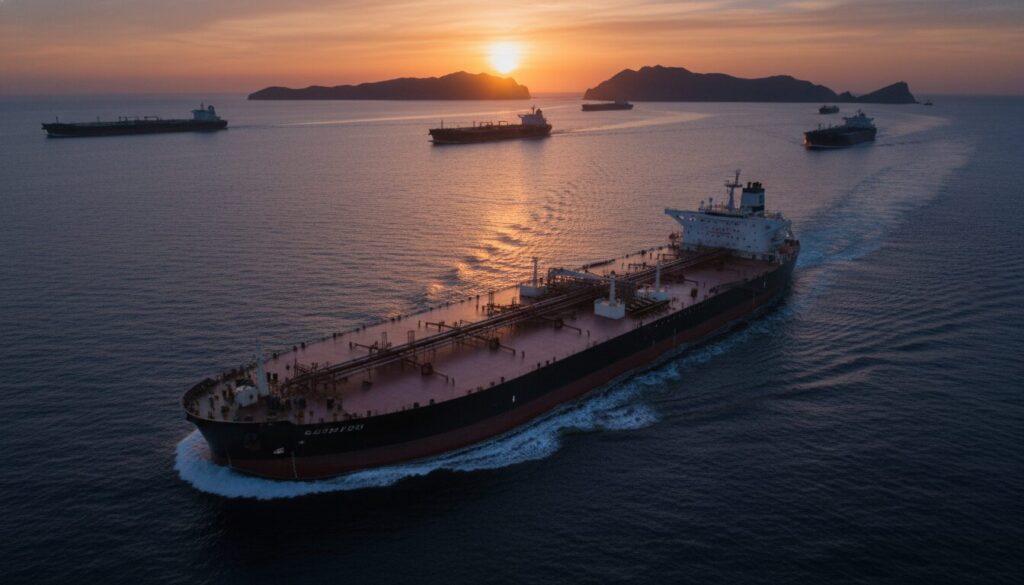
The immediate fallout is quantifiable and severe. Ship-tracking data reveals a rapidly growing flotilla of idling supertankers outside the Persian Gulf and in the Gulf of Oman. Vessels such as the Mitake and Eagle Veracruz have been observed loitering, waiting for security clearance that may not come for weeks.
The Economic Ripple Effect
The disruption has triggered immediate market volatility. The 12% spike in oil prices affects not only energy procurement but arguably every tier of the global supply chain:
- Bunker Adjustment Factors (BAF): Carriers will inevitably pass on rising fuel costs to shippers.
- Manufacturing OpEx: Energy-intensive manufacturing in Asia and Europe faces immediate cost inflation.
- Inventory Stagnation: With Qatar—the world’s second-largest LNG exporter—pausing voyages, just-in-time energy deliveries to Europe are stalling, threatening industrial continuity.
As discussed in our analysis of the CMA CGM Reverses Red Sea Return, geopolitical instability is becoming a chronic condition rather than an acute event. The situation in Hormuz amplifies the risks identified in the Red Sea, creating a “multi-front” chokepoint crisis.
Global Trend: Regional Responses to Energy Paralysis
The reaction to the blockade varies significantly across major economic zones, highlighting the fragmented nature of global energy dependence.
Asia: The Primary Victim
Asian economies, particularly China, Japan, and South Korea, rely heavily on Middle Eastern crude.
- Japan: Companies like NYK and Mitsui O.S.K. Lines are prioritizing asset safety over schedule integrity. The prompt suspension of transits indicates a shift toward “defensive logistics.”
- China: As the largest importer of Iranian and Gulf oil, Chinese state-owned refiners are facing supply shocks, forcing a rapid pivot to Russian pipelines and strategic reserves.
Europe: The LNG Dilemma
Europe’s decoupling from Russian gas made Qatari LNG a cornerstone of its energy security.
- The Qatar Pause: QatarEnergy’s decision to pause shipments affects terminals in the UK, Belgium, and Italy.
- Consequence: European utility companies are scrambling for spot-market LNG from the US, driving up transatlantic shipping rates and commodity prices simultaneously.
United States: The Export Pivot
While the U.S. is energy independent, global pricing is interconnected.
- Strategic Opportunity: U.S. LNG exporters are seeing surged demand to fill the gap left by Qatari pauses.
- Logistics Strain: This shift puts immense pressure on Atlantic shipping lanes and Gulf Coast export terminals, creating secondary congestion points.
Comparison: Red Sea vs. Strait of Hormuz Disruptions
The following table illustrates why the Hormuz crisis is structurally different from recent Red Sea disruptions.
| Feature | Red Sea / Suez Crisis | Strait of Hormuz Crisis |
|---|---|---|
| Geography | Through-route (Mediterranean to Indian Ocean) | Cul-de-sac (Entry/Exit to Persian Gulf) |
| Alternative Route | Cape of Good Hope (+10-14 days) | None (Pipelines are insufficient capacity) |
| Primary Cargo | Containers, Mixed Dry Bulk | Crude Oil (20% global supply), LNG |
| Strategic Response | Rerouting vessels | Halting / Idling vessels |
| Immediate Cost | Higher fuel/transit time | Global energy price shock |
Case Study: NYK Line’s “Safety-First” Resilience Strategy
In the face of ambiguous geopolitical threats, indecision is often costlier than the threat itself. Nippon Yusen Kaisha (NYK) provides a case study in decisive corporate governance during a crisis.
The Challenge
NYK operates one of the largest merchant fleets in the world. With the U.S. bombing campaigns intensifying and Iran threatening retaliation against commercial shipping, the risk to crew and assets in the Strait skyrocketed overnight.
The Strategy: Absolute Halt
Unlike competitors who adopted a “wait-and-see” approach, relying on naval escorts, NYK issued a fleet-wide instruction to indefinitely halt transits through the Strait.
- Prioritization of Human Capital: By placing crew safety above contractual delivery windows, NYK mitigated the risk of catastrophic loss (e.g., missile strikes or seizure).
- Asset Preservation: Supertankers are capital assets worth hundreds of millions. Idling the Mitake outside the danger zone preserves the asset for when the corridor reopens.
- Communication: Early declaration of Force Majeure (or impending delays) allowed customers to activate contingency plans earlier than those relying on carriers who attempted to run the blockade.
The Result
While NYK faces short-term revenue deferral, they avoid the catastrophic liability of a struck vessel. Furthermore, by halting before entering the trap, they retain the option to divert vessels to other regions if the blockade becomes permanent—a flexibility lost by vessels trapped inside the Gulf.
See also: CMA CGM Reverses Red Sea Return regarding similar decision-making matrixes where safety overrides route efficiency.
Key Takeaways for Logistics Leaders
The crisis in the Strait of Hormuz offers critical lessons for strategy executives across all sectors, not just energy.
1. The End of Single-Source Dependency
Supply chains that rely on a single geography for >20% of their inputs are structurally unsound.
- Actionable Insight: Conduct a Tier-N supplier audit. If your primary energy or raw material source relies on the Strait of Hormuz, immediate diversification (e.g., sourcing from the Americas or West Africa) is mandatory.
2. Real-Time Intelligence is Non-Negotiable
The companies that reacted fastest (like NYK) utilized advanced risk intelligence.
- Actionable Insight: Invest in AI-driven predictive logistics platforms (e.g., Windward or Kpler) that integrate geopolitical news feeds with vessel tracking. Knowing a strike has occurred is not enough; knowing which vessels are impacted in real-time is the competitive advantage.
3. Contractual Agility
The rigidity of traditional logistics contracts is a liability in a volatile world.
- Actionable Insight: Review “Force Majeure” and “War Risk” clauses. Future contracts must include dynamic pricing mechanisms that account for sudden rerouting or idling, ensuring that the cost of resilience is shared between shipper and carrier.
Future Outlook
The situation in the Strait of Hormuz is unlikely to resolve quickly. We are entering a period of sustained volatility where the “Freedom of Navigation” can no longer be guaranteed by naval power alone.
- Short Term (Q1-Q2): Expect continued idling of the tanker fleet. Retail energy prices will likely remain elevated, creating inflationary pressure on logistics costs globally.
- Medium Term: A structural shift in energy flows. Europe and Asia will accelerate “friend-shoring” of energy, prioritizing supplies from the US, Australia, and Norway over the volatile Middle East.
- Long Term: This crisis may act as a catalyst for the green transition. The volatility of fossil fuel logistics is now a tangible operational risk, making the stability of locally generated renewable energy a supply chain imperative, not just an ESG goal.
For the global logistics industry, the lesson is clear: Resilience is no longer a buzzword—it is the primary metric of survival.