In a landscape defined by volatility and the relentless pursuit of efficiency, the traditional boundaries between ocean freight, rail transport, and over-the-road trucking are dissolving. The latest strategic move comes from a heavyweight partnership: Norfolk Southern (NS) and global shipping giant CMA CGM.
By launching a door-to-door intermodal offering that utilizes 40-foot ocean containers for domestic inland transit, these giants are not merely adding a route—they are attempting to rewrite the operational playbook for Midwest-to-West Coast logistics. For executives watching the capacity indicators, this development offers a critical hedge against future volatility.
The Convergence of Rail Economics and Trucking Simplicity
Why does this partnership matter now? The timing coincides with a broader industry anxiety regarding long-haul trucking capacity and rising ocean costs. As discussed in our analysis of 2026 Trucking Capacity: Why It Tightens & Who Wins, the market is bracing for a supply squeeze. Shippers are desperately seeking distinct alternatives to the volatile spot truckload market without sacrificing the simplicity of a “one-click” booking.
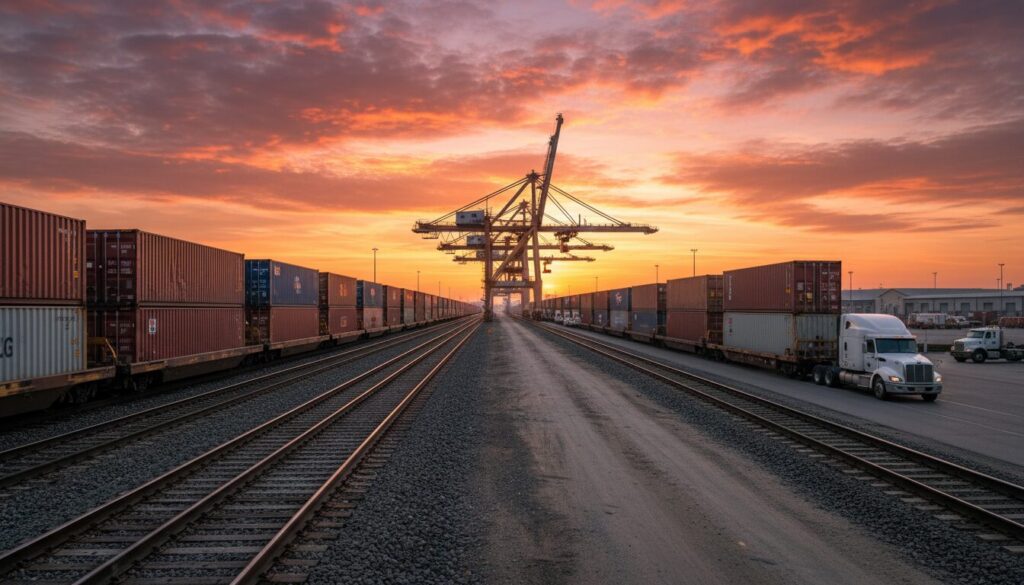
Norfolk Southern and CMA CGM are addressing this gap by offering a service that looks like a truck move—door-to-door service, transactional pricing—but operates on rail economics. This hybrid model is designed to capture the “middle mile” efficiency of rail while stripping away the complexity typically associated with intermodal contracts.
The Facts: Deconstructing the Partnership
To understand the strategic implications, we must first break down the operational mechanics of this alliance. This is not a standard “hook-and-haul” agreement; it is a highly integrated service product managed through NS’s subsidiary, Triple Crown Services.
Key Operational Metrics
The following table outlines the core components of the new service:
| Feature | Details |
|---|---|
| Partners | Norfolk Southern (via Triple Crown Services) & CMA CGM |
| Service Model | Door-to-Door Intermodal (Rail + Drayage) |
| Equipment | 40-foot High-Cube Ocean Containers |
| Primary Corridor | Midwest (Cleveland, Detroit, Columbus) West Coast (Los Angeles, Seattle) |
| Booking Method | Transactional pricing & capacity via Modal-X (Digital Platform) |
| Strategic Goal | Utilize empty container backhauls; Provide truck-like ease of use |
The “Look and Feel” Strategy
The defining characteristic of this service is the “look and feel.” Traditionally, shifting from truck to rail involves a complex web of drayage providers, rail billing, and equipment chassis management.
By utilizing Triple Crown Services to manage the door-to-door execution and the Modal-X platform for digital booking, the partnership aims to make booking a container load on a train as intuitive as booking a 53-foot trailer. This lowers the barrier to entry for mid-sized shippers who may not have the volume to command dedicated intermodal pricing agreements.
Industry Impact: Who Wins and Who Adjusts?
This development sends ripples through multiple layers of the supply chain ecosystem. The utilization of 40-foot ocean containers for domestic moves is a specific tactical choice with broad implications.
1. Shippers: A Hedge Against Volatility
For shippers, specifically those moving dense freight or those flexible enough to utilize 40-foot capacity rather than the standard domestic 53-footers, this is a significant win.
- Cost Control: Rail generally offers a cost advantage over long-haul trucking. By simplifying access, shippers can reduce total landed costs.
- Capacity Assurance: With the trucking market projected to tighten, having an established intermodal channel provides a safety valve.
- Inventory Staging: The connection between the manufacturing heartland (Detroit/Ohio) and the Asia-facing gateways (LA/Seattle) allows for better inventory positioning before final export or after import.
2. The Carrier Landscape: Ocean Integrators Rise
CMA CGM’s involvement highlights the continued trend of ocean carriers evolving into vertical integrators. They are no longer content with port-to-port service; they want ownership of the inland move.
This puts pressure on traditional domestic freight brokers and 3PLs. When the asset owner (the ocean carrier) partners directly with the rail network to sell a door-to-door product, the intermediaries must work harder to prove their value.
3. Sustainability and Carbon Reduction
This initiative is a direct play for Scope 3 emissions reduction. Rail is approximately 3-4 times more fuel-efficient than trucking. By converting long-haul highway miles (e.g., Detroit to Los Angeles) into rail miles, shippers can claim significant carbon savings.
Furthermore, this service optimizes the “empty mile.” Ocean containers often return to ports empty. By loading domestic freight into these 40-foot containers for the return trip to the West Coast, the industry reduces the waste of repositioning empty equipment.
LogiShift View: The Strategic “So What?”
At LogiShift, we believe this partnership signals a deeper structural shift than a simple new trade route. It represents the digitization of asset utilization.
The 40-Foot Container Nuance
Executives must note the equipment type: 40-foot High-Cubes. The domestic standard is the 53-foot container. Shippers utilizing this new service must account for roughly 25-30% less cubic capacity per load compared to a 53-footer.
Why does this work?
- Density: For shippers moving heavy goods (auto parts, industrial machinery, grain products) where weight limits are hit before volume limits, the 40-foot container is more efficient.
- Flow Balance: The U.S. has a chronic imbalance of imports vs. exports. Ocean carriers need to get boxes back to the West Coast. Offering these boxes for domestic freight at competitive rates subsidizes the repositioning cost.
Digital Friction Removal
The use of Modal-X is the linchpin. We are witnessing the death of the “black box” pricing model in rail. If intermodal wants to compete with the spot truck market, it must offer instant, transactional pricing. This partnership validates that digital platforms are now essential infrastructure for Class I railroads, not just optional add-ons.
As we noted regarding global volatility, Transpacific Ocean Rates Spike to Start 2026, ocean pricing is unpredictable. By locking in efficient inland transport, shippers can mitigate at least one variable in their total cost equation.
Takeaway: Actionable Steps for Executives
The Norfolk Southern and CMA CGM alliance is a live operational option, not a theoretical pilot. To capitalize on this, supply chain leaders should take the following steps:
- Analyze Freight Density: Audit your outbound shipments from the Midwest. Identify SKUs that “weigh out” before they “cube out.” These are your prime candidates for shifting from 53′ trailers to these 40′ rail options.
- Test the Modal-X Platform: Even if you have existing rail contracts, pilot a few transactional moves via the digital platform to assess the “ease of business.” Speed of booking is often an overlooked cost saver.
- Diversify Before the Crunch: Do not wait for the trucking capacity crunch predicted for late 2025/2026. Establish relationships with intermodal providers like Triple Crown now.
- Review Sustainability Goals: Calculate the carbon savings of shifting Detroit-to-LA moves from road to rail. This data is increasingly valuable for ESG reporting and customer compliance.
The bottom line: The line between a trucking company and a steamship line is blurring. This partnership proves that in the modern supply chain, the mode of transport matters less than the seamlessness of the service.