
The logistics landscape has shifted from predictable stability to a state of permanent volatility. Operations leaders are battling rising fuel surcharges, labor shortages, and fluctuating consumer demand. In this high-pressure environment, relying on manual calculations is no longer sustainable, yet the leap to futuristic technology often feels out of reach.
Many professionals find themselves trapped in “Excel Hell”—managing complex supply chains with fragile spreadsheets that crash when data volume spikes. On the other end of the spectrum, the industry buzzes about “Full Digital Twins”—exact virtual replicas of the supply chain powered by real-time IoT sensors. While aspirational, Digital Twins are often too expensive, complex, and data-intensive for immediate problem-solving.
This is where Digital Sandboxes: The Practical Middle Ground Between Spreadsheets and Full Digital Twins comes into play.
This article explores how Digital Sandboxes provide a “safe space” for innovation, allowing logistics leaders to simulate decisions, optimize costs, and reduce risk without the heavy price tag of a full Digital Twin or the limitations of a spreadsheet.
What Are Digital Sandboxes?
To understand Digital Sandboxes: The Practical Middle Ground Between Spreadsheets and Full Digital Twins, we must first define the gap it fills.
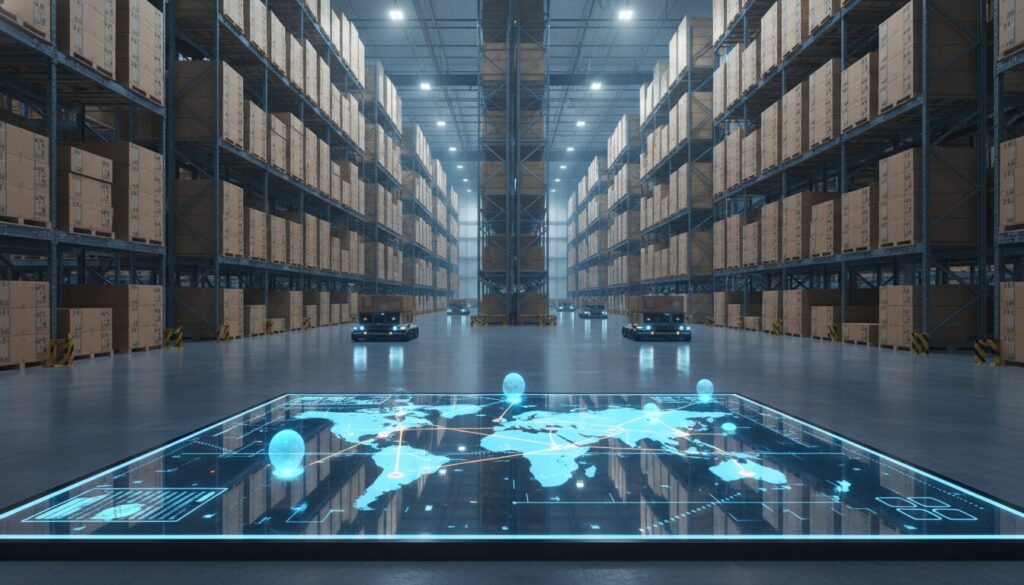
A Digital Sandbox is a simulation environment that uses your supply chain data to model “what-if” scenarios. Unlike a spreadsheet, it handles complex variables and logic automatically. Unlike a full Digital Twin, it does not necessarily require real-time synchronization with physical assets (like sensors on every forklift).
Think of it as a flight simulator for your supply chain. You can crash the plane in the simulator (test a risky inventory strategy) without hurting the real pilot or passengers (your live operations).
The Evolution of Planning Tools
The following table outlines where Digital Sandboxes fit in the logistics technology stack:
| Feature | Spreadsheets | Digital Sandbox | Full Digital Twin |
|---|---|---|---|
| Primary Goal | Record keeping & basic math | Strategic simulation & planning | Real-time monitoring & execution |
| Data Connection | Manual entry / Static | Batch uploads / API integration | Live IoT streams / Real-time |
| Complexity | Low (until it breaks) | Medium (User-friendly logic) | High (Requires data scientists) |
| Cost | Low | Moderate | High |
| Time to Value | Immediate | Weeks to Months | Months to Years |
As discussed in our article on Supply Chain Maturity: A Modern Approach to Disruption, moving away from reactive tools (spreadsheets) toward proactive tools is the key to surviving the current “perma-crisis.”
Why Digital Sandboxes Are Critical Now
The logistics industry is currently in a transitional phase. We are moving toward a future of autonomous operations, as highlighted in our Autonomous Supply Chain Planning: 2025 Guide. However, most companies are not yet ready for fully autonomous systems.
1. The Data Gap
Full Digital Twins require pristine, real-time data. If your data maturity is at a “medium” level (you have good historical data but lack live sensor feeds), a Digital Twin project may fail. A Digital Sandbox, however, thrives on historical data and projected forecasts, making it immediately usable.
2. The Need for Speed
In a volatile market, you cannot wait six months to configure a model to see if a new carrier strategy works. Digital Sandboxes: The Practical Middle Ground Between Spreadsheets and Full Digital Twins allow for rapid iteration. You can spin up a model in the morning and have actionable answers by the afternoon.
3. Risk Mitigation
Operations leaders are hesitant to change core processes because “breaking” the supply chain is costly. Sandboxes remove this fear by isolating the testing environment from the production environment.
Key Benefits of Adopting Digital Sandboxes
Implementing a Digital Sandbox strategy offers both quantitative and qualitative advantages over traditional methods.
Strategic “What-If” Analysis
The primary power of the sandbox is the ability to answer complex questions that spreadsheets cannot handle:
- Network Design: “What happens to our transit times if we close the West Coast DC and open two smaller hubs in Nevada and Arizona?”
- Inventory Optimization: “If we increase safety stock by 10% for SKU Class A, how much does our holding cost rise versus the reduction in stockouts?”
- Cost Modeling: With carriers adjusting prices frequently, sandboxes allow you to plug in new rate cards to see the impact. For a practical example of why this is necessary, see our analysis on Best Tools Comparing 2026 FedEx & UPS Rate Increases.
Faster Stakeholder Buy-In
Spreadsheets are often unintelligible to anyone other than their creator. Digital Sandboxes usually come with visualization layers—maps, charts, and flow diagrams. When you can show executives a visual simulation of a cost-saving measure, approval comes much faster than showing them a grid of 50,000 numbers.
Intelligent Logic Without the AI Overhead
While Artificial Intelligence is transforming logistics, not every problem requires a neural network. Sandboxes often use heuristic logic and optimization algorithms that are powerful but easier to understand than “Black Box” AI.
However, as you scale, these sandboxes often serve as the foundation for more advanced AI integration. For more on this trajectory, read Supply Chain Planning Reimagined: Embedded AI Guide.
Implementation: Moving from Excel to Sandboxes
Adopting Digital Sandboxes: The Practical Middle Ground Between Spreadsheets and Full Digital Twins requires a shift in mindset and process. Here is a step-by-step guide to successful implementation.
Step 1: Define the Scope
Do not try to simulate your entire global supply chain on day one. Pick a specific pain point.
- Example Scopes:
- Last-mile route efficiency in the Northeast region.
- Warehouse labor allocation during peak season.
- Supplier selection based on lead time variability.
Step 2: Data Hygiene Assessment
A sandbox is only as good as the sand you put in it. While you don’t need perfect real-time data, you do need accurate:
- Product dimensions and weights (Master Data).
- Historical shipment volumes.
- Current freight rates and contract terms.
- Supplier lead times (average and standard deviation).
Step 3: Select the Right Tool
Look for software that specifically markets itself as “Supply Chain Design,” “Network Optimization,” or “Simulation” platforms.
Key Features to Look For:
- Scenario Management: The ability to save “Scenario A” and “Scenario B” and compare them side-by-side.
- Visual Mapping: GIS integration to see flows on a map.
- Excel Interoperability: The ability to import/export to Excel (because Excel will never truly disappear).
Step 4: The Iterative Loop
Use the sandbox to test hypotheses, not just to validate what you already know.
- Model: Build the current state (Baseline).
- Disrupt: Introduce a variable (e.g., “Fuel price doubles”).
- Optimize: Run the solver to find the best reaction.
- Execute: Apply the findings to the real world.
Use Cases: Where Sandboxes Shine
To further clarify Digital Sandboxes: The Practical Middle Ground Between Spreadsheets and Full Digital Twins, let’s look at three specific industry use cases.
1. The “Peak Season” Stress Test
A retailer anticipates a 30% surge in volume for Black Friday.
- Spreadsheet Approach: Apply a flat +30% to last year’s averages. Result: Staffing shortages on specific peak days because averages hide spikes.
- Digital Sandbox Approach: Run a simulation using historical daily order patterns, adjusted for the 30% growth. The sandbox reveals that the bottleneck isn’t picking, but the packing stations. The manager rents extra packing equipment in advance.
2. Carrier Negotiation Strategy
A shipper is negotiating contracts.
- Spreadsheet Approach: Compare base rates.
- Digital Sandbox Approach: Re-run the last 12 months of shipment history using the new proposed rate cards (including accessorials and zones). The sandbox reveals that while Carrier A has lower base rates, their zone jumping fees make them 5% more expensive than Carrier B for this specific shipper’s profile.
3. Resilience Planning
A manufacturing component coming from Asia is delayed.
- Spreadsheet Approach: Panic and expedite everything via air freight.
- Digital Sandbox Approach: Simulate the production line impact. The model shows that you have enough safety stock to last 2 weeks. You only need to air freight 15% of the shipment to keep the line running; the rest can arrive via ocean. Cost saved: $50,000.
Conclusion
The pressure to digitize logistics operations is immense, but the path doesn’t have to be an all-or-nothing leap. Digital Sandboxes: The Practical Middle Ground Between Spreadsheets and Full Digital Twins offer a strategic sweet spot. They provide the analytical power needed to navigate complex supply chain challenges without the overwhelming cost and technical debt of a full Digital Twin.
For logistics leaders, the message is clear: Stop relying on fragile spreadsheets for critical decisions. By adopting a digital sandbox approach, you can test the future before you live it, ensuring your supply chain is resilient, efficient, and ready for whatever 2026 brings.
Next Steps:
- Audit your current planning tools: Are you over-reliant on Excel?
- Identify one specific operational headache (e.g., inventory balancing) to pilot a sandbox simulation.
- Explore our guide on Autonomous Supply Chain Planning: 2025 Guide to see where this technology leads in the near future.


