The era of “growth at any cost” in global logistics is officially ending, replaced by a new mandate: “growth with decoupled costs.”
For the past decade, the world’s largest retailers have engaged in an arms race of capital expenditure (CapEx), pouring billions into robotics, automated storage and retrieval systems (AS/RS), and last-mile infrastructure. Now, a signal from the industry’s bellwether suggests the tide is turning.
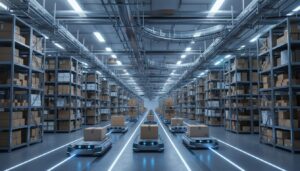
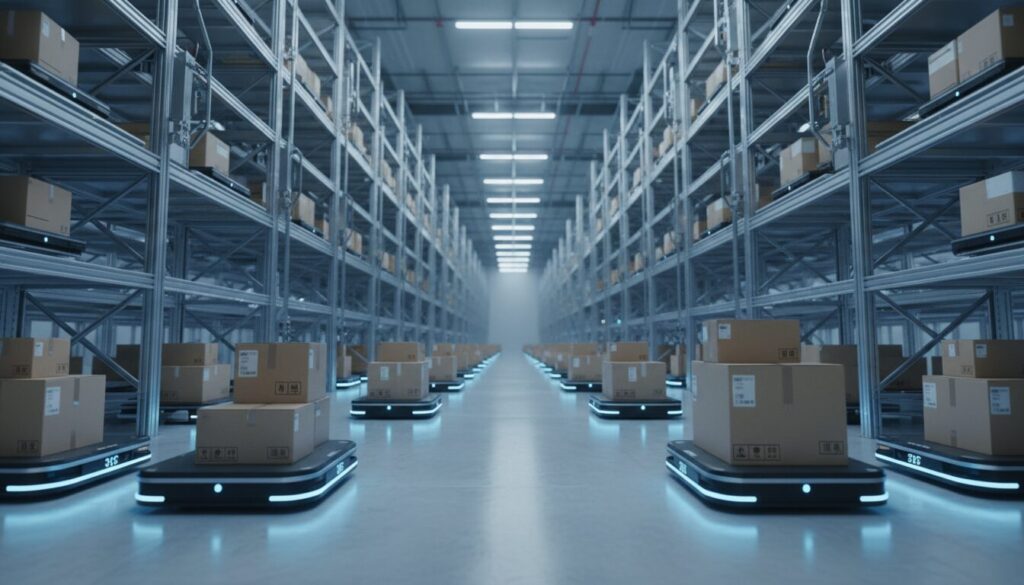
Walmart CEO Doug McMillon recently announced that the retail giant’s supply chain capital expenditures are set to “peak” within the next two years. This is not a retreat; it is the announcement of a completed transformation. By 2026, Walmart expects to have retrofitted the majority of its regional distribution centers (RDCs) with next-generation automation.
For innovation leaders and strategy executives globally, this signals a pivotal shift. We are moving from the Implementation Phase—characterized by high spend and pilot programs—to the Optimization Phase, where the focus shifts to asset utilization, marginal cost reduction, and rapid ROI.
Why It Matters: The End of the “Build” Phase
Why is a “peak” in spending significant? In logistics strategy, a peak in CapEx followed by sustained revenue growth indicates the successful deployment of a “flywheel.”
Walmart is effectively decoupling its inventory growth from its sales growth. In Q4, while sales surged, global inventory grew only 2.6%—roughly half the rate of sales growth. This is the “Holy Grail” of supply chain management: selling more while holding less, achieved not through magic, but through granular, tech-driven visibility.
This trend is not isolated to Bentonville, Arkansas. It reflects a global maturity in logistics technology. As we noted in our coverage of the robotics sector, the industry is moving past experimentation.
See also: Manifest 2026 Recap: Robotics Moves to Mass Scale
Global Trend: The Race for Automated Density
While Walmart captures headlines in the US, the drive toward automated density is playing out differently across the major economic zones of the US, Europe, and Asia.
United States: The Micro-Fulfillment Battleground
In the US, the primary driver is speed. The geography requires a hybrid model where massive RDCs feed smaller, closer nodes. Walmart and Amazon are currently locking horns over “sub-same-day” delivery. The differentiator is no longer just having the item; it is the ability to stage it within 10 miles of the consumer before they buy it, predicted by AI.
Europe: Efficiency Meets Constraints
In Europe, land scarcity and strict labor regulations drive a different automation trend: vertical density. Companies like Ocado (UK) and DHL (Germany) are pioneering grid-based robotics that maximize cubic volume rather than square footage. The focus here is on sustainability and reducing the carbon footprint per unit delivered.
Asia: Integration and Resilience
In China and Japan, the focus shifts to integrated resilience. Following years of disruption, Asian logistics leaders are building “Just-in-Case” networks. Japan, specifically, is merging automation with disaster preparedness.
See also: Komeri’s Mega-Hub: Global Lessons in Disaster Logistics
Comparison of Global Automation Priorities
| Region | Primary Driver | Tech Focus | Key Metric |
|---|---|---|---|
| North America | Delivery Speed | Retrofitting Legacy RDCs, Micro-fulfillment | Cost Per Order |
| Europe | Land/Labor Constraints | Cube-storage, Green Logistics | Carbon/m² Efficiency |
| Asia (China/Japan) | Resilience & Scale | Fully Autonomous Hubs, Cross-border Integration | Throughput Stability |
Case Study: Walmart’s Automation Overhaul
Walmart’s strategy serves as a masterclass in modernizing legacy infrastructure rather than building from scratch. Their approach relies on three core pillars: Automated RDCs, Store-as-Node fulfillment, and Workforce Augmentation.
1. Retrofitting the Backbone
Walmart is currently retrofitting 23 of its 42 US regional distribution centers with high-tech automation, largely powered by their partnership with Symbotic. The goal is 100% coverage.
The impact of this retrofit is immediate and measurable. By automating the palletization and sorting process, Walmart transforms chaotic, labor-intensive warehouses into high-speed flow centers. This allows goods to move from the RDC to the store shelf faster, reducing the “dwell time” of inventory.
2. The Store as a High-Speed Node
Perhaps the most disruptive element of Walmart’s strategy is utilizing its 4,700+ US stores as fulfillment centers.
- The Stat: 35% of store-fulfilled orders are now delivered to customers in under three hours.
- The Method: By using stores as forward-deployed warehouses, Walmart negates Amazon’s advantage in centralized fulfillment. The “last mile” becomes the “last three miles.”
3. Digitizing the Workforce
Automation is often framed as “robots replacing humans,” but Walmart’s case proves the “Cobot” (Collaborative Robot) model. Over 1 million US associates now utilize handheld devices equipped with computer vision and augmented reality.
These devices map inventory in real-time, guiding associates to precise locations for picking or restocking. This “digital twin” of the store inventory is what allows for the decoupling of sales and stock levels mentioned earlier. If you know exactly where every item is, you need less safety stock.
Analyzing the “Inventory Decoupling” Effect
The following table illustrates the shift in Walmart’s operational efficiency compared to traditional retail models.
| Operational Metric | Traditional Retail Model | Walmart’s “Peak CapEx” Model (2025) |
|---|---|---|
| Inventory Growth | Linearly linked to Sales Growth (1:1) | Decoupled (Inventory grows at ~50% of Sales rate) |
| Picking Method | Manual, Paper/RF-based | Computer Vision & AR-assisted |
| RDC Function | Storage & Bulk Breaking | Flow-Through (Cross-docking emphasis) |
| Delivery Window | 2-5 Days | <3 Hours (for 35% of volume) |
Key Takeaways for Logistics Leaders
For strategy executives observing Walmart’s maneuvers, several lessons apply regardless of industry or region.
1. CapEx Peaks are Strategic Signals
When a market leader announces a peak in spending, it means the technology has matured. If your organization is still “piloting” basic automation while competitors are finishing their implementation phase, you are falling behind the efficiency curve. The window for “early adoption” has closed; we are now in the phase of “mandatory standardization.”
2. Visibility Creates Capital Efficiency
Walmart’s ability to grow global inventory at only 2.6% while sales soared proves that better data creates cash flow. By investing in computer vision and real-time tracking, companies can free up working capital previously tied up in “safety stock.”
3. The Hybrid Labor Model
Success lies in equipping the workforce, not just replacing them. The deployment of handhelds to 1 million associates highlights that the interface between human judgment and algorithmic efficiency is where the immediate productivity gains lie.
4. Regional Labor Context Matters
While automation handles the predictable volume, human labor handles the variability. As companies automate US/EU hubs, the reliance on nearshore labor for specialized tasks remains critical.
See also: Mexico Nearshoring: 3 Ways to Evaluate Regional Labor ROI
Future Outlook: The Post-Peak Era
What happens after the peak? Once Walmart and its peers finalize their hardware installations, the competition will shift to Software and AI.
The “Brain” of the Supply Chain
With the physical robots in place, the differentiator becomes the algorithm governing them. We expect a surge in investment in:
- Predictive Procurement: AI that orders stock before the trend fully emerges.
- Dynamic Routing: Real-time adjustment of delivery routes based on traffic, weather, and store capacity.
Convergence of Retail and Logistics
The line between a “retail store” and a “warehouse” will vanish completely. As seen with Walmart’s 35% under-3-hour delivery rate, the retail floor is now a logistics stage. This will force urban planners and real estate developers to rethink commercial zoning, as every shopping center becomes a potential micro-hub.
Conclusion
Walmart’s announcement that supply chain spending will “peak” is not a sign of slowing down—it is a warning shot. It signifies that the infrastructure for the next decade of retail dominance is nearly built. For the rest of the industry, the race is no longer about who can build the biggest robot, but who can use that robot to drive marginal costs to zero.