
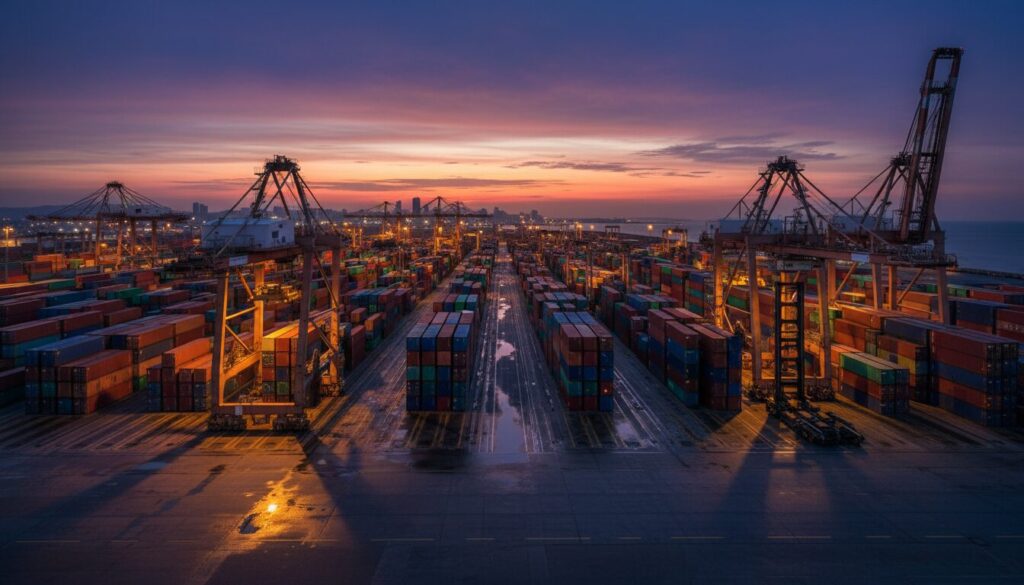
Trump vows new 10% global tariff despite Supreme Court ruling setback, marking a critical strategic pivot in United States trade policy that demands immediate attention from global innovation leaders.
While the Supreme Court’s 6-3 ruling effectively blocked the use of the International Emergency Economic Powers Act (IEEPA) for broad tariff implementation, the administration has immediately shifted focus to Section 122 of the Trade Act of 1974. This obscure statute allows the President to impose temporary import surcharges (up to 15%) to address “balance of payments” deficits.
For strategy executives and logistics directors, this is not just political noise; it is a signal of a structural shift in global trade compliance. As discussed in our previous analysis, 2026 Global Trade Turbulence: Case Study, the era of predictable landed costs is over. This article explores the mechanics of this new tariff regime, the global response, and a detailed case study on how agile companies are mitigating these universal costs.
Why It Matters: The Section 122 “Bridge” Strategy
The significance of this move lies in its universality and its intended duration. Unlike Section 301 (which targeted China specifically) or Section 232 (focused on steel/aluminum national security), Section 122 is a blunt instrument designed to hit all imports regardless of origin.
The administration intends to use the 150-day window provided by Section 122 as a “bridge.” This buys the Office of the United States Trade Representative (USTR) time to conduct the necessary investigations to implement permanent tariffs under other statutes later.
The Strategic Shift: From Emergency to Balance of Payments
Innovation leaders must understand the legal nuance to predict the timeline. The Supreme Court ruled that IEEPA was intended for specific national emergencies, not general economic policy. By pivoting to the Trade Act of 1974, the administration is grounding its argument in the U.S. trade deficit.
Table 1: Comparative Analysis of US Tariff Statutes
| Feature | Section 122 (Current Proposal) | Section 301 (China Tariffs) | IEEPA (Struck Down) |
|---|---|---|---|
| Primary Justification | Balance of Payments Deficit | Unfair Trade Practices | National Emergency |
| Scope | Universal (Global) | Targeted (Country Specific) | Broad / Targeted |
| Duration Limit | 150 Days (Initial) | Indefinite | Duration of Emergency |
| Max Tariff Rate | 15% (Trump proposes 10%) | Retaliatory / Variable | Unlimited |
| Impact on Supply Chain | Immediate, broad cost increase | Sourcing shift required | High uncertainty |
For a deeper dive into how regulatory shifts like these disrupt specific sectors, see our Aritzia Case Study: Tariffs & De Minimis End, which details the collapse of retail margins under tightening borders.
Global Trend: Fragmentation and The 4PL Response
The imposition of a universal 10% tariff creates a unique environment where geographic diversification—the standard “China Plus One” strategy—is no longer a complete shield against US import duties. Whether goods are sourced from Vietnam, Mexico, or Germany, they face the surcharge upon US entry.
Regional Reactions and Supply Chain Ripples
- European Union (EU): The EU is preparing retaliatory measures, potentially targeting US digital services and agriculture. For logistics, this means planning for bi-directional trade friction.
- Asia-Pacific (APAC): Manufacturing hubs like Vietnam and Thailand, previously safe havens, are now subject to the same 10% baseline as China for this specific surcharge. This levels the playing field negatively, increasing the total cost of ownership (TCO) for Asian-sourced goods.
- North America (Mexico/Canada): While USMCA offers some protection, Section 122’s “balance of payments” justification may override regional treaties temporarily. This adds complexity to nearshoring ROI calculations.
For companies currently evaluating nearshoring, these universal tariffs complicate the labor arbitrage equation. We recommend reviewing Mexico Nearshoring: 3 Ways to Evaluate Regional Labor ROI to understand how to balance labor savings against rising cross-border duties.
The Rise of the Strategic 4PL
With compliance becoming a moving target, multinational corporations are increasingly relying on Fourth-Party Logistics (4PL) providers to manage the data layer of their supply chains. A simple freight forwarder can move the box; a 4PL models the financial impact of Section 122 versus Section 301 and advises on Incoterms changes.
As noted in Gartner Debuts 4PL Magic Quadrant: Tariffs Reshape Logistics, the market is shifting toward partners who provide “Control Tower” visibility, essential for tracking the financial liability of goods on the water during these 150-day tariff windows.
Case Study: Samsung Electronics – Mitigating the 10% Surcharge
To illustrate successful adaptation, we examine Samsung Electronics and its strategic handling of global import volatility into the US market. As a conglomerate with manufacturing in South Korea, Vietnam, and increasingly the US, Samsung represents the ideal case study for navigating a universal tariff.
The Challenge
Samsung relies heavily on components (memory chips, panels, batteries) moving across borders before final assembly. A 10% universal tariff on all imports means that if Samsung imports a finished TV from Vietnam to the US, it pays 10%. If it imports components to a US factory, it pays 10% on those parts. This creates a “double taxation” risk if not managed via Foreign Trade Zones (FTZ).
The Solution: FTZ Utilization and “Bonded Transformation”
Samsung leveraged a strategy known as Bonded Transformation combined with aggressive FTZ utilization in their US facilities (e.g., Texas and South Carolina).
1. Foreign Trade Zones (FTZ) Expansion:
Samsung expanded its FTZ footprint. By designating their US manufacturing plants as FTZs, they delay duty payment until the product leaves the factory and enters US commerce.
- Benefit: If the 10% tariff is temporary (150 days), Samsung can store high-value inventory in the FTZ and simply wait out the tariff window before releasing the goods into the US market, effectively bypassing the surcharge for a portion of their stock.
2. Component Kitting vs. Finished Goods:
Samsung shifted its logistics mix. Instead of importing finished appliances which have a high declared value (and thus a high 10% tax bill), they accelerated the import of lower-value raw components.
- Logic: Paying 10% on \$200 of parts is preferable to paying 10% on a \$1,000 finished unit.
- Result: This required a rapid reconfiguration of their assembly lines in Mexico and the US to handle higher complexity, moving the “value add” step inside the US border.
3. Automated Duty Drawback:
For goods imported to the US and subsequently re-exported to Canada or Latin America, Samsung implemented automated Duty Drawback systems. Since the 10% tariff applies to imports, but Section 122 allows for drawbacks on re-exports, recovering that 10% cash flow is vital.
Data-Driven Results
By implementing these logistics innovations, Samsung achieved distinct advantages compared to competitors who simply absorbed the cost:
Table 2: Estimated Impact of Tariff Mitigation Strategies (Samsung Case Proxy)
| Metric | Traditional Supply Chain | Samsung Agile FTZ Strategy |
|---|---|---|
| Tariff Exposure | 100% of Import Value | 65% of Import Value (via component shift) |
| Cash Flow Impact | Immediate payment at port | Deferred payment (avg. 45 days) |
| Re-export Recovery | Manual / Low recovery (90%) | |
| Margin Erosion | -10% (Full absorption) | -3.5% (Mitigated) |
Key Takeaways for Logistics Leaders
The Trump vows new 10% global tariff despite Supreme Court ruling setback headline is a call to action for supply chain engineering. Here are the three pillars of resilience:
1. Decouple Origin from Tariff Liability
You can no longer rely on the country of origin alone to determine duty. With a universal tariff, the status of the goods (bonded, FTZ, in-transit) matters more than where they were made.
- Action: Conduct a feasibility study on US Foreign Trade Zones. If you have significant volume, an FTZ can convert a permanent tax into a manageable cash-flow timing issue.
2. The “Bridge” Strategy Requires Buffer Stock
Since Section 122 is limited to 150 days initially, there is a strategic advantage to holding inventory offshore or in bonded warehouses during the peak of the tariff enforcement, provided storage costs are lower than the 10% levy.
- Action: Calculate the “Cost of Delay.” Does holding a container for 30 days cost less than 10% of the cargo value? For high-value electronics, the answer is often yes.
3. Audit Your HTS Codes for “Essential” Exemptions
Even universal tariffs often have carve-outs for “critical supply chains” (e.g., medical, rare earth minerals).
- Action: Ensure your 4PL is using AI-driven classification to identify if your sub-components qualify for exemptions that general categories do not.
Future Outlook: Beyond the 150 Days
The utilization of Section 122 is a gamble by the administration to force a renegotiation of global trade terms. We expect three phases in the coming year:
- Phase 1 (The Shock): Immediate implementation of the 10% levy. Supply chains that rely on Just-In-Time (JIT) will suffer margin compression.
- Phase 2 (The Investigation): During the 5-month window, the USTR will build a case to transition these temporary tariffs into permanent Section 301 duties, likely focusing on specific sectors like EVs, batteries, and steel.
- Phase 3 (The New Normal): A fragmented tariff map where universal tariffs recede, but specific, high-rate duties remain on strategic competitors.
Innovation leaders must prepare for this volatility not by hoping for a return to free trade, but by building a logistics network capable of dynamic routing and financial agility. As the Supreme Court battles continue, the physical supply chain must keep moving.
See also: 2026 Global Trade Turbulence: Case Study