
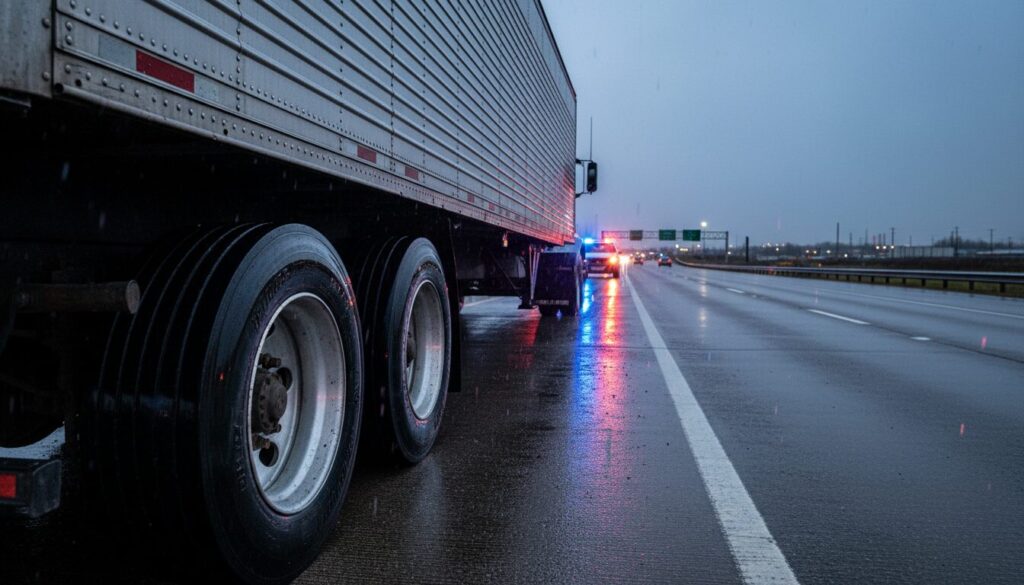
The landscape of risk management in the U.S. logistics sector is undergoing a quiet but seismic shift. While the industry has historically focused on Department of Transportation (DOT) compliance, Hours of Service (HOS), and equipment safety, a new variable has entered the equation with force: the integration of local law enforcement into federal immigration efforts.
With the dramatic expansion of the 287(g) program, Immigration and Customs Enforcement (ICE) is no longer just an agency operating at the border. It is effectively present at weigh stations, truck stops, and roadside inspections across the American interior. For fleet executives and logistics managers, this is not a political debate; it is an urgent operational reality.
The expansion of deputized local agencies means that a routine brake check can now escalate into a driver detainment, leading to immediate cargo stranding, insurance rescission, and catastrophic liability exposure. As we approach a volatile market cycle, understanding these risks is critical to maintaining operational continuity.
The New Enforcement Reality: 287(g) Expansion
To understand the magnitude of the risk, one must look at the data. The 287(g) program, which delegates federal immigration enforcement authority to state and local law enforcement officers, has seen unprecedented growth in 2025.
The Numbers Behind the Surge
The scope of this enforcement network is vastly larger than in previous years. According to recent data, the footprint of immigration enforcement has moved from federal agents to local deputies who interact with truck drivers daily.
| Metric | Statistic | Context |
|---|---|---|
| Total Deputized Agencies | 1,427 | Local, county, and state agencies now hold 287(g) authority. |
| New Agreements (2025) | 1,130+ | A massive surge in signed agreements occurred in just one year. |
| Geographic Spread | 40 States | Enforcement is no longer limited to border states; it is nationwide. |
| Primary Mechanism | Task Force Model | Allows officers to question status during routine roving operations (traffic stops). |
The “Task Force Model” Explained
The critical change for the trucking industry lies in the specific model of 287(g) being utilized. Previously, many agreements were limited to the “Jail Enforcement Model,” where immigration checks only occurred after an individual was booked into a detention facility for a crime.
The shift toward the Task Force Model changes the venue of enforcement to the roadside. Under this model, officers trained and deputized by ICE can screen for immigration status during the course of their daily duties. This includes:
- Commercial Vehicle Enforcement (CVE) inspections at weigh stations.
- Routine traffic stops for minor infractions (e.g., a broken taillight).
- Post-accident investigations, regardless of fault.
For a fleet manager, this means the risk of losing a driver—and the cargo they are hauling—is now present in nearly every jurisdiction a truck passes through.
The Three Pillars of Risk for Logistics Providers
The impact of these sweeps extends far beyond the human resources department. It fundamentally alters the risk profile of carrying freight in the United States.
1. Operational Disruption and Stranded Cargo
The most immediate impact of a driver detainment is the abandonment of the vehicle. Unlike a standard HOS violation where a driver is placed out of service for 10 hours, an immigration detention removes the driver indefinitely.
- Scenario: A driver hauling high-value refrigerated pharmaceuticals is stopped at a weigh station in a 287(g) jurisdiction.
- Outcome: The driver is detained. The truck is impounded or left parked.
- Result: The reefer unit runs out of fuel or fails while the truck sits. The cargo spoils. The carrier misses the delivery window, incurring massive penalties.
Recovering a truck from police impound is complex, but recovering a load when the authorized operator is in federal custody creates a logistical nightmare involving power-of-attorney issues and rapid repowering of freight.
2. The “Nuclear Verdict” Catalyst
Perhaps the most dangerous aspect of this trend is the legal liability it creates. Plaintiff attorneys in the trucking sector are aggressive in seeking “nuclear verdicts” (judgments exceeding $10 million). The expansion of ICE enforcement provides them with a new weapon: Negligent Hiring and Entrustment.
Federal regulations, specifically 49 CFR §391.11(b)(2), mandate that a driver must “can read and speak the English language sufficiently to converse with the general public, to understand highway traffic signs and signals in the English language, to respond to official inquiries, and to make entries on reports and records.”
If a carrier hires a driver who does not meet this standard—often a correlation with undocumented status—and that driver is involved in an accident:
- The Violation: The carrier is found to be in violation of federal safety regulations.
- The Argument: Attorneys will argue the carrier prioritized cheap labor over safety regulations, acting with “gross negligence.”
- The Verdict: Insurance policies may contain exclusions for criminal acts or hiring violations, leaving the carrier to face the full financial wrath of the court alone.
While technology helps mitigate physical risks—as discussed in our analysis of the Samsara AI Coach: Ending the Era of Nuclear Verdicts—AI cannot correct a fundamental hiring violation. A camera system recording a driver who legally shouldn’t be behind the wheel only serves as evidence against the carrier.
3. Capacity Contraction
The psychological impact on the driver pool cannot be overstated. As news of truck stop sweeps spreads, drivers with uncertain status (or even those with valid status who fear profiling) may exit the industry or refuse to drive in certain corridors.
This exacerbates an already fragile supply/demand balance. As we predicted in our report on 2026 Trucking Capacity: Why It Tightens & Who Wins, the market is heading toward a capacity crunch. The removal of a segment of the driver workforce—estimated by some analysts to be significant in long-haul sectors—will artificially tighten capacity further, driving up rates but also increasing service failures.
LogiShift View: The Era of “Defensible” Logistics
The expansion of 287(g) signals a transition from “Compliance” to “Defensibility.”
In the past, checking a box on an application form might have been considered sufficient compliance. Today, that approach is a liability trap. The “LogiShift” analysis suggests that the industry will bifurcate into two distinct tiers:
- The Verified Fleets: These carriers will implement rigorous, documented English proficiency testing and continuous Motor Vehicle Record (MVR) monitoring. They will command higher rates because they shield shippers from vicarious liability.
- The High-Risk Pool: Carriers that continue to rely on the “don’t ask, don’t tell” hiring model will face increasing insurance premiums or outright cancellations. As 287(g) data becomes public, insurers will correlate geolocations of enforcement with carrier routes to assess risk.
The Prediction: Expect insurance carriers to introduce specific exclusions regarding driver eligibility related to 49 CFR §391.11(b)(2). If a claim arises involving a driver who cannot speak English or lacks proper status, coverage could be denied, forcing the carrier into bankruptcy.
What Executives Must Do Next
To protect operating authority and assets, logistics leaders must move immediately.
For Carriers:
- Audit the Files: Conduct a comprehensive audit of all Driver Qualification (DQ) files. Ensure I-9 forms are not just present, but verified.
- Test English Proficiency: Do not assume proficiency. Implement a standardized, documented test for all drivers to satisfy 49 CFR §391.11(b)(2). This documentation is your shield in court.
- Develop a Crisis Protocol: Create a specific standard operating procedure (SOP) for “Driver Detainment.” Who gets called? How is the truck recovered? How is the customer notified?
For Shippers:
- Update Carrier Guidelines: Revise your carrier selection criteria. Require carriers to certify their vetting processes regarding English proficiency and legal work status.
- Monitor the Network: Be aware of which lanes pass through high-enforcement 287(g) zones (particularly in the Southeast and Midwest) and adjust lead times if capacity in those regions tightens.
The presence of ICE at truck stops is a reality that changes the risk calculus for every load. By shifting from passive compliance to active defensibility, companies can navigate this enforcement surge without becoming a headline.