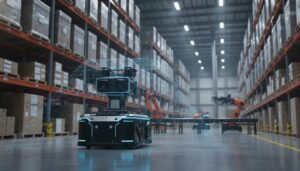

The global logistics landscape is undergoing a tectonic shift. We are moving away from the era of pure “Just-in-Time” efficiency toward a hybrid model of “Just-in-Case” resilience. Nowhere is this more evident than in Japan, a nation that operates on the front lines of both demographic collapse and frequent natural disasters.
On February 23, 2026, Komeri Co., Ltd., a leading Japanese home improvement retailer, will launch its largest logistics facility to date: the Komeri Kansai Distribution Center in Hashimoto City, Wakayama Prefecture. Spanning over 82,000 square meters, this facility is not merely a warehouse; it is a strategic blueprint for how global supply chains can balance mass consolidation with disaster resilience.
For innovation leaders and strategy executives in the US, Europe, and Asia, the Komeri case study offers critical insights into the future of “Dual-Use” logistics infrastructure—facilities designed for commercial efficiency during peace and humanitarian aid during crises.
Why It Matters: The Convergence of Efficiency and Resilience
Japan is currently navigating the “2024 Problem”—a severe labor shortage in the logistics sector exacerbated by stricter overtime regulations. This domestic crisis serves as a bellwether for the rest of the developed world. Germany, the US, and South Korea are all facing aging workforces that threaten supply chain fluidity.
However, labor is only half the equation. The increasing frequency of climate-related disruptions—from hurricanes in Florida to floods in Europe—demands that logistics hubs serve a higher purpose. The Komeri Kansai Distribution Center represents a strategic response to these dual pressures:
- Labor Scarcity: Solved through massive consolidation and automation.
- Supply Chain Fragility: Solved through integrated disaster relief capabilities.
As discussed in our analysis of Japan’s 2026 Logistics Budget: A Global Efficiency Blueprint, the state is actively funding initiatives that secure supply chains against these systemic risks. Komeri’s expansion aligns perfectly with this national agenda.
Global Trend: The Rise of the “Mega-Hub”
Before dissecting the Komeri case, it is essential to contextualize this within the global logistics environment. Across major markets, retailers are abandoning fragmented, small-scale warehousing in favor of massive, highly automated regional hubs.
United States: The Automation Giants
In the US, the trend is driven by Walmart and Amazon. Walmart’s “Next Generation” fulfillment centers utilize high-density storage and automated retrieval systems to serve stores and e-commerce simultaneously. The focus here is primarily on speed and labor reduction to combat rising wages.
Europe: Sustainability and Regionalization
In Europe, companies like Lidl and DHL are focusing on “Green Hubs.” These facilities consolidate inventory to reduce truck miles (Scope 3 emissions) and often integrate rail links. The priority is environmental compliance and cross-border fluidity.
China: Speed and AI Integration
China’s JD.com operates “Asia No.1” logistics parks, which are massive structures heavily reliant on AI and 5G to manage inventory turnover rates that dwarf Western standards. The focus is pure volume and velocity.
Comparative Analysis: Global Logistics Hub Strategies
The following table illustrates how Komeri’s approach compares to global counterparts:
| Feature | US Model (e.g., Walmart) | EU Model (e.g., DHL/Lidl) | Japan Model (Komeri) |
|---|---|---|---|
| Primary Driver | Labor Cost & E-commerce Speed | Sustainability & Cross-border Flow | Labor Shortage & Disaster Resilience |
| Automation Level | High (Robotics focused) | Medium (Process focused) | High (Sorting/Labor-saving focused) |
| Inventory Type | Omni-channel (Retail + D2C) | Bulk & Palletized | “Trinity” (Dry, Fresh, & Emergency) |
| Strategic Unique Selling Point | Last-mile integration | Carbon neutrality | NPO Partnerships for Disaster Relief |
Case Study: Komeri Kansai Distribution Center
The Komeri Kansai Distribution Center, commencing operations on February 23, 2026, acts as the central nervous system for the company’s operations in Western Japan.
1. Unprecedented Scale and Consolidation
With a total floor area of 82,269 square meters (approx. 885,000 sq ft), this is the largest of Komeri’s 12 domestic bases. Historically, Japanese retail logistics involved fragmented centers for different product categories. Komeri has upended this by consolidating three distinct functions into one facility:
- TC (Transfer Center): Cross-docking for immediate store replenishment.
- DC (Distribution Center): Storage for inventory buffering.
- FMC (Fresh Management Center): Dedicated zones for plants, agricultural supplies, and perishable goods.
This consolidation reduces inter-facility transport costs and optimizes truck loading ratios, directly addressing the efficiency mandates highlighted in Japan’s New Logistics Law: Defining Shipper Responsibility.
2. Digital Transformation (DX) and Automation
To combat the chronic driver and warehouse worker shortage, the facility integrates advanced material handling systems. By automating the sorting process for store deliveries, Komeri reduces the manual workload not only within the warehouse but also at the retail store level (shelf-ready packaging). This end-to-end labor saving is a critical differentiator in a market where hiring is the number one bottleneck.
3. The “Dual-Use” Infrastructure: Disaster Resilience
The most innovative aspect of the Komeri hub—and the key takeaway for global executives—is its role as disaster infrastructure.
Wakayama Prefecture is geographically vulnerable to the predicted Nankai Trough Earthquake. Recognizing this, Komeri has integrated a dedicated disaster response stockpile within the facility.
- NPO Partnership: Komeri collaborates with the NPO “Peace Winds Japan.”
- Rapid Response: In the event of a catastrophe, the center switches modes from a commercial retail hub to a humanitarian aid base.
- Stockpile: Essential supplies (water, blue tarps, hygiene products) are permanently stored and managed alongside commercial inventory.
This approach creates a “living stockpile.” Unlike government warehouses where goods often expire unused, Komeri’s commercial rotation ensures that emergency supplies are always fresh and logistics channels remain active.
Key Takeaways for Global Leaders
The Komeri launch offers actionable lessons for logistics strategists worldwide.
Lesson 1: Consolidate for Automation ROI
Automation yields the highest Return on Investment (ROI) at scale. By consolidating regional operations into an 82,000 m2 hub, Komeri justifies the capital expenditure (CAPEX) for advanced sorting systems. Small, fragmented warehouses cannot support the heavy machinery required to solve the labor shortage.
Lesson 2: Build “Dual-Use” Resilience
Corporate Social Responsibility (CSR) is evolving into Corporate Social Infrastructure. Komeri’s model of housing NPO stockpiles within commercial hubs reduces the cost of public disaster preparedness while enhancing the company’s brand value and community ties.
- Strategy Tip: Explore partnerships with NGOs or local governments to utilize your warehouse space for emergency reserves.
Lesson 3: Shipper Responsibility is the New Norm
As regulators globally look to decarbonize and humanize supply chains, “Shipper Responsibility” is becoming law. Komeri’s move to optimize truck loads and reduce wait times via this new hub aligns with the regulatory shifts discussed in Japan’s New Logistics Law: Defining Shipper Responsibility. The days of inefficient, partial-load shipping are ending.
Future Outlook: The Era of the Resilient Mega-Hub
The launch of the Komeri Kansai Distribution Center on February 23 signals a maturing of the logistics industry. We are moving past the phase of purely expanding for market share and entering a phase of strategic consolidation and resilience.
This mirrors the broader industry trend we see in major players like Yamato Transport. As noted in our article on Yamato HD’s Harvest Strategy: Logistics Case Study, the focus is shifting from “Execution” (building the network) to “Harvest” (optimizing and utilizing the network for maximum profit and stability).
The Forecast:
- 2026-2030: We expect to see more “Hybrid Hubs” across Asia and the US, where private logistics networks are officially integrated into national disaster response frameworks.
- Technology: The next step for facilities like Komeri’s will be the integration of autonomous yard trucks and drone delivery for the “last mile” in disaster zones, bypassing damaged road infrastructure.
For global executives, the Komeri example proves that the next generation of logistics centers must be bigger, smarter, and, crucially, safer for the communities they serve.