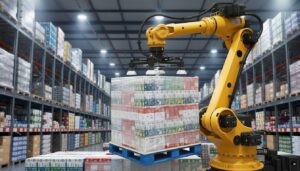

The global pharmaceutical supply chain is undergoing a tectonic shift. As the industry pivots from small-molecule drugs to temperature-sensitive biologics, gene therapies, and mRNA vaccines, the logistics infrastructure supporting it must evolve from simple “storage” to sophisticated “life support systems.”
On February 20, 2026, Green Express Group will mark a significant milestone in this evolution with the completion of its Saitama Pharmaceutical Cold Chain Logistics Center. Located in Kasukabe City, Saitama Prefecture, this 12,100 m² facility is not just a warehouse; it is a strategic node designed to withstand disasters, manage hazardous materials, and maintain precise thermal control.
For global strategy executives, the Green Express expansion offers a critical case study in how mid-sized logistics players are specializing to meet the demands of Pharma 4.0. This article explores the global context of pharmaceutical logistics, analyzes regional trends in the US and Europe, and dissects the Green Express facility as a blueprint for future-proof supply chain infrastructure.
Why It Matters: The Era of Precision Logistics
The traditional model of ambient supply chains is obsolete for modern healthcare. The rise of biopharmaceuticals—which now account for nearly 40% of the global R&D pipeline—requires strict adherence to Good Distribution Practice (GDP) standards. A temperature excursion of just two degrees can render a million-dollar shipment of oncology drugs useless.
Furthermore, resilience is no longer a buzzword; it is a mandate. Following the supply chain disruptions of the early 2020s, pharmaceutical companies are prioritizing logistics partners who can guarantee business continuity during natural disasters.
As discussed in our previous analysis of Komeri’s Mega-Hub: Global Lessons in Disaster Logistics, the shift from “Just-in-Time” to “Just-in-Case” is reshaping infrastructure investment. The Green Express facility exemplifies this trend, integrating hazardous material capabilities with high-grade disaster resilience.
Global Trend: The Race for Cold Chain Dominance
While Japan strengthens its domestic infrastructure, major markets in the US, Europe, and China are aggressively expanding their pharmaceutical logistics capabilities. The trend is universal: specialization, automation, and sustainability.
United States: The Rise of “Vein-to-Vein” Logistics
In the US, the focus is on hyper-specialization for cell and gene therapies. Companies like UPS Healthcare and FedEx are investing heavily in “vein-to-vein” logistics—tracking patient samples to the lab and the finished therapy back to the patient.
- UPS Healthcare: Recently expanded its “UPS Premier” service, utilizing RFID and cellular sensors to track critical healthcare shipments within feet of their location inside warehouses.
- Americold: Investing in automated cold storage facilities that utilize robotics to minimize human presence in sub-zero environments, reducing thermal fluctuations.
Europe: Sustainability Meets GDP Compliance
Europe leads the charge in sustainable cold chains. With strict EU GDP regulations, logistics providers are tasked with maintaining quality while reducing carbon footprints.
- DHL Supply Chain: Has rolled out carbon-neutral warehouses across Germany and the Benelux region, utilizing solar arrays and heat pumps to maintain temperature zones without heavy reliance on fossil fuels.
- Kuehne+Nagel: Expanding its “PharmaChain” network with airside facilities that reduce tarmac exposure time, critical for maintaining temperature integrity during modal transfers.
China: Infrastructure at Speed
China represents the fastest-growing market for cold chain logistics, driven by government mandates to improve vaccine distribution safety.
- SF Express: Has built a massive network of pharmaceutical-grade cold storage hubs, utilizing autonomous vehicles for last-mile delivery in urban centers.
- JD Logistics: Leverages its proprietary blockchain technology to provide end-to-end traceability for temperature-sensitive drugs, addressing counterfeit concerns.
Comparative Analysis: Global Approaches to Pharma Logistics
The following table highlights how different regions prioritize their infrastructure investments:
| Feature | United States | Europe (EU) | Asia (China/Japan) |
|---|---|---|---|
| Primary Driver | Innovation (Cell/Gene Therapy) | Sustainability & Regulation (GDP) | Disaster Resilience & Speed |
| Key Technology | IoT Tracking / RFID | Green Energy / Heat Pumps | Automation / Hazardous Handling |
| Network Structure | Centralized Mega-Hubs | Decentralized Cross-Border Nodes | Dense Urban Distribution Centers |
| Cold Range Focus | Ultra-Low (-80°C to -20°C) | Broad Range (2°C to 25°C) | Multi-Zone (-20°C to 20°C) |
Case Study: Green Express Saitama Pharmaceutical Center
Against this global backdrop, the Green Express Group’s new facility in Saitama stands out as a model of high-efficiency, resilient infrastructure tailored for the Japanese market’s specific needs.
Facility Overview
Scheduled for completion on February 20, 2026, the Saitama Pharmaceutical Cold Chain Logistics Center is a four-story facility with a total floor area of 12,099.99 m². It is strategically designed to serve the Greater Tokyo Area, one of the world’s most densely populated urban corridors.
Strategic Location
The facility is situated in Kasukabe City, just 0.7 km from the Showa Interchange (IC) of the National Route 4 Bypass.
- Connectivity: This location offers immediate access to the Koshigaya-Kasukabe Bypass, facilitating rapid distribution into Tokyo while avoiding the capital’s heaviest congestion points.
- Disaster Mitigation: Inland locations like Kasukabe are increasingly preferred over Tokyo Bay coastal areas to mitigate tsunami and liquefaction risks—a critical consideration for pharmaceutical stockpiles.
Core Capabilities
1. Multi-Temperature Zoning
The center is engineered to handle a diverse pharmaceutical portfolio through four distinct temperature zones:
- Standard (20°C)
- Refrigerated (5°C)
- Frozen (-20°C)
- Ventilated Storage
This flexibility allows Green Express to consolidate shipments for hospitals and pharmacies, combining vaccines (frozen), insulin (refrigerated), and oral solids (standard) into single delivery runs. For inventory management in these harsh frozen environments, we are seeing a global move toward automation. As noted in Corvus One Alert: The Future of Cold Chain Drone Inventory, automated drones are becoming essential for maintaining inventory accuracy in -20°C zones without exposing workers to thermal stress.
2. Hazardous Materials Handling
A standout feature of this facility is the inclusion of a 120.9 m² dedicated hazardous materials warehouse.
- The Challenge: Many pharmaceutical reagents and solvents are classified as hazardous materials. Few logistics centers have the licenses or infrastructure (fire suppression, ventilation, containment) to store them legally and safely.
- The Solution: By integrating this capability, Green Express creates a “one-stop-shop” for pharmaceutical manufacturers, eliminating the need to split inventory between general and hazmat warehouses.
3. Business Continuity (BCP)
In line with Japan’s stringent disaster preparedness standards, the facility is equipped with emergency backup power generators. This ensures that temperature control systems remain operational during grid outages, preventing millions of dollars in inventory loss and ensuring patient access to drugs during crises.
Key Takeaways for Logistics Leaders
The Green Express Saitama project offers several actionable insights for innovation leaders and strategy executives globally:
1. Niche Specialization is a Competitive Moat
Generalist warehousing is a race to the bottom on price. Green Express differentiates itself by combining GDP compliance, Hazardous Materials handling, and Multi-temp logistics. For 3PLs, the lesson is clear: build infrastructure that solves complex regulatory pain points for clients.
2. Resilience as a Service
Clients are willing to pay a premium for assurance. The inclusion of backup power and the strategic inland location are not just “features”; they are core value propositions. In an era of climate instability, “Resilience as a Service” will become a standard offering in high-value supply chains.
3. The Importance of Public-Private Alignment
This facility aligns perfectly with national interests. As detailed in Japan’s 2026 Logistics Budget: A Global Efficiency Blueprint, the Japanese government is heavily investing in securing supply chains. Private facilities that support these national goals (like stable drug supply) often benefit from smoother regulatory approvals and stronger long-term demand.
4. Infrastructure Density
The 1.5t/m² floor load capacity (for floors 1-3) indicates a design built for heavy automation and high-density racking. In urban logistics, where land is expensive (like Tokyo, London, or New York), vertical density and load-bearing capacity are critical for ROI.
Future Outlook
The completion of the Green Express Saitama facility in February 2026 is a microcosm of the future of logistics. We expect three major trends to accelerate following this launch:
- Hybrid Warehousing: We will see more facilities mixing “dangerous goods” storage with “clean room” pharmaceutical storage. The regulatory hurdles are high, but the efficiency gains for the supply chain are undeniable.
- Energy Independence: While the current facility relies on backup generators, the next generation of cold chain hubs will likely integrate on-site solar and battery storage to operate off-grid for extended periods, insulating them from energy price spikes and grid instability.
- Algorithmic Quality Control: Future facilities will integrate AI to predict temperature excursions before they happen, adjusting HVAC systems in real-time based on weather forecasts and incoming inventory thermal mass.
For global logistics players, the Green Express expansion is a signal: the era of the “simple warehouse” is over. The future belongs to smart, resilient, and highly specialized infrastructure that serves as a guardian of public health.