
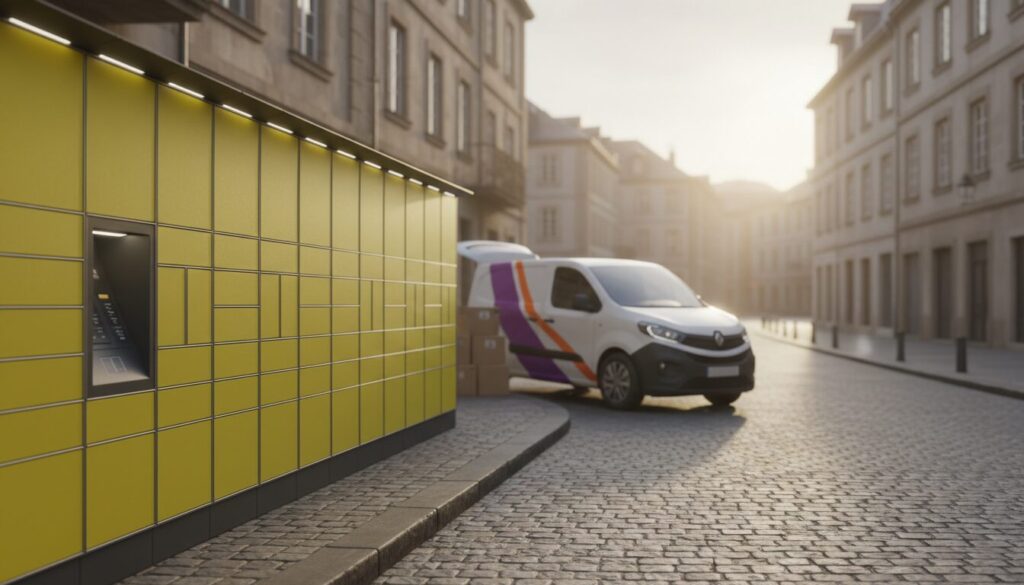
The era of “free delivery at any cost” is officially over. In a move that fundamentally rewrites the rules of European logistics, FedEx, in partnership with private equity firm Advent International, has initiated a €7.8 billion ($9.2 billion) acquisition of InPost.
For years, the industry has debated the sustainability of residential B2C delivery. The “last mile” has long been the “most expensive mile,” eroding margins for giants like FedEx and UPS while e-commerce volumes skyrocketed. By acquiring InPost—Europe’s undisputed leader in Automated Parcel Machine (APM) infrastructure—FedEx is signaling a massive strategic pivot: shifting from high-cost doorstep delivery to high-margin Out-of-Home (OOH) networks.
This is not just a merger; it is a validation of the locker-centric logistics model on a global scale. Below, we dissect why this deal matters, the global trends driving it, and what strategy executives must learn from this $9.2 billion case study.
Why It Matters: The End of “Volume is Vanity”
For the last decade, logistics carriers have been locked in a volume war, largely driven by the Amazon effect. The premise was simple: fill the trucks, and profitability will follow. However, as residential stops increased, drop density decreased, and the cost per stop skyrocketed.
The FedEx-InPost deal represents a correction to this trajectory. It prioritizes profitability over ubiquity.
InPost handled over 1.4 billion parcels in 2025, with volumes quadrupling in just five years. By integrating InPost’s infrastructure, FedEx gains immediate access to a network that allows a courier to deliver 1,000 packages to a few dozen locker banks in the time it takes to deliver 100 packages to individual doorsteps.
As discussed in our analysis of Yamato HD’s Harvest Strategy, the global logistics sector is shifting from an “expansion phase” to a “harvest phase.” Carriers are no longer willing to subsidize B2C shipping. The acquisition of InPost is the ultimate execution of this strategy: structural cost reduction through infrastructure ownership.
Global Trend: The Out-of-Home (OOH) Divide
To understand why FedEx pulled the trigger on this deal now, one must look at the global disparity in last-mile innovation. The “Locker Revolution” is unevenly distributed, and Europe has become the battleground.
The Three Geographies of Last-Mile Delivery
| Region | Dominant Model | Key Players | OOH Maturity |
|---|---|---|---|
| China | Hyper-Density Lockers | Hive Box, Cainiao | High: Standardized. Most urban deliveries go to lockers or compounds. |
| Europe | Hybrid Open Networks | InPost, DHL, PostNord | Medium-High: Rapid adoption driven by sustainability and urbanization. |
| USA | Doorstep Reliance | Amazon Hub, UPS, FedEx | Low: Cultural preference for porch drop-off; lockers are niche. |
The Asian Blueprint
In China, doorstep delivery is the exception, not the rule. Companies like SF Holding and J&T Express have thrived by utilizing high-density networks where couriers drop off hundreds of parcels at a single Hive Box location. This efficiency is what FedEx is trying to replicate in Europe.
For more on how Asian giants are reshaping global logistics standards, see: J&T Express & SF Holding: Reshaping Global Logistics.
The European Context
Europe presents a unique challenge: high labor costs, strict environmental regulations (Low Emission Zones), and dense historic city centers that are nightmares for delivery vans. InPost cracked this code by deploying smaller, modular lockers everywhere—from supermarkets to apartment blocks—creating a “slipper distance” network (lockers close enough to walk to in slippers).
Case Study: FedEx Acquires InPost
The Deal Structure and Strategy
The Financials:
FedEx and Advent International have launched an all-cash tender offer valuing InPost at €7.8 billion ($9.2 billion). Post-acquisition, FedEx and Advent will each hold a 37% stake, ensuring shared governance while allowing InPost to retain its agile, digital-first culture.
The Asset:
FedEx is not buying a delivery company; it is buying a digital operating system for the last mile.
- 61,000+ Automated Parcel Lockers (APMs) across Europe.
- 34,000 PUDO (Pick Up Drop Off) points.
- Dominant market share in Poland, France (Mondial Relay), and rapidly growing footprints in the UK and Italy.
The Strategic Synergies
1. Margin Expansion via Consolidation
FedEx’s legacy network is built on the “hub-and-spoke” model designed for B2B. Retrofitting this for B2C has been costly.
- Old Model: Driver stops at 100 houses = 100 stops = High Fuel/Labor.
- New Model: Driver stops at 5 InPost walls = 500 packages delivered = Low Fuel/Labor.
This creates a structural margin advantage that competitors relying purely on vans cannot match.
2. The “Green” Last Mile
Sustainability is a KPI for global supply chains. InPost’s data suggests that locker delivery reduces CO2 emissions by up to 75% compared to traditional doorstep delivery.
- This allows FedEx to offer “Green Delivery” tiers to enterprise clients (like Nike or Zara) who need to report on Scope 3 emissions.
3. Cross-Border E-Commerce
FedEx owns the planes; InPost owns the ground. By linking FedEx’s global air network directly to InPost’s lockers, a package from New York can theoretically land in a locker in Warsaw with zero residential delivery attempts. This seamless integration removes the “failed delivery attempt” costs that plague cross-border logistics.
Key Takeaways for Logistics Leaders
The FedEx-InPost deal offers critical lessons for innovation leaders and strategy executives across the supply chain.
1. Own the Interface, Not Just the Truck
FedEx realized that controlling the handover point (the locker) is more valuable than controlling the van. The interface is where the customer experience happens. InPost’s app-based opening mechanism and “label-less” returns provide a UX that traditional logistics carriers have failed to build.
2. The Rise of “Agnostic” Infrastructure
While FedEx is a major stakeholder, InPost’s success lies in its open-network philosophy (delivering for multiple retailers). The future of logistics is shared infrastructure. Building proprietary, walled-garden networks (like Amazon attempting to build its own locker network in every country) is capital inefficient compared to acquiring a neutral platform that already has scale.
3. Decoupling from Residential Dependency
Supply chain resilience means diversifying delivery methods. Relying 100% on gig-economy drivers or traditional couriers is risky (labor shortages, strikes). Automated infrastructure works 24/7/365 without sick days.
This mirrors the strategic decoupling we are seeing between major retailers and carriers. See also: Amazon-UPS De-Coupling: The Singapore Supply Chain Blueprint.
Future Outlook
The €7.8B acquisition is likely the first domino in a global consolidation of OOH networks.
What to Watch Next:
- The US Response: Will UPS or Amazon accelerate their locker strategies in the US to match FedEx’s move in Europe? The US market remains severely under-penetrated for lockers relative to its e-commerce volume.
- Carrier Agnosticism: Will FedEx keep InPost “open” to other carriers? If they restrict InPost exclusively to FedEx volumes, they risk losing the density that makes the network profitable. The involvement of Advent International (PE firm) suggests a profit-first motive, likely keeping the network open to third parties.
- Robotization: The next step for InPost is likely not just static lockers, but autonomous feeding mechanisms. Expect pilots involving autonomous mobile robots (AMRs) filling these lockers at night.
Conclusion:
FedEx has placed a $9.2 billion bet that the future of B2C is not at your door, but at the corner store. By integrating InPost, FedEx has transformed from a legacy carrier into a leader in sustainable, automated last-mile infrastructure. For the rest of the industry, the message is clear: Automate the last mile, or drown in its costs.