
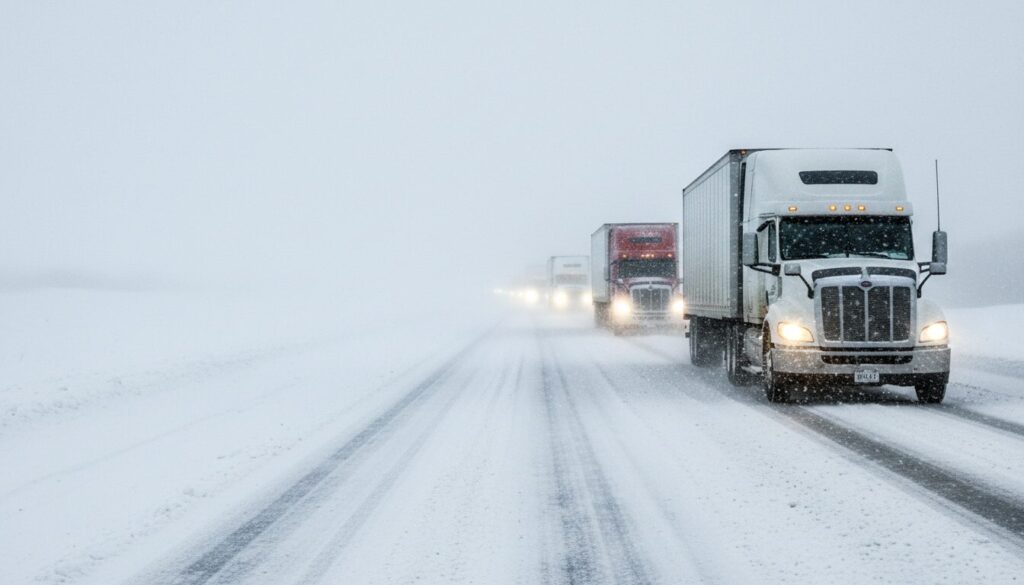
For logistics executives, weather events are usually treated as transient disruptions—painful but temporary blips on the operational radar. However, the data emerging from Winter Storm Fern suggests something far more critical is happening beneath the surface of the US freight market.
Winter Storm Fern did not just freeze highways; it froze the assumption that we are still in a “soft” market.
Triggering a massive surge in truckload rejection rates, this event has become the most disruptive weather phenomenon in five years. But the real story isn’t the storm itself—it is the market’s inability to absorb the shock. This volatility signals that the prolonged period of excess capacity and shipper pricing power is rapidly coming to an end.
As discussed in our recent coverage of the Winter Storm Fern Impact: Logistics Volatility Alert, the immediate chaos was visible. Now, we analyze why this specific event marks a structural turning point for the industry.
The Data: Anatomy of a Market Shock
To understand the magnitude of this shift, we must look beyond the meteorological data and focus on the rejection metrics. The System Volatility Index (STRI) experienced a spike that defies standard winter trends.
Normally, a storm causes a regional spike that dissipates as the ice melts. In this case, the rejection rates climbed aggressively and, crucially, established a new, higher baseline even as the weather cleared.
The following table summarizes the key metrics defining this disruption:
| Metric | Observation | Implication |
|---|---|---|
| STRI Surge | >4 percentage points in 2 weeks | The sharpest rejection spike in 5 years, indicating zero buffer capacity. |
| Recovery Period | 32 to 49 days (Projected) | Supply chains will remain out of sync for over a month, affecting Q1 performance. |
| SAMA Baseline | New floor of 6.98% | The “soft market” floor has risen; rates will not return to pre-storm lows. |
| Disruption Level | High | Standard routing guides are failing; spot market exposure is increasing. |
The SAMA Signal: Why This Time is Different
The most alarming metric for shippers is the Seasonally Adjusted Moving Average (SAMA). This model filters out the daily noise to show the true trend line of the market.
Currently, the SAMA model projects a new market floor of 6.98%. This aligns with previous peak levels seen during tighter market cycles. This indicates that the “standard operating procedures” of the last 18 months—where shippers could rely on near-100% tender acceptance at low rates—are no longer applicable. The market structure has fundamentally hardened.
Industry Impact: The Ripple Effect
The disruption caused by Winter Storm Fern is not limited to delayed trucks. It is creating a cascading failure across the supply chain ecosystem.
1. Carrier Leverage Returns
For the past two years, carriers have operated on thin margins, accepting almost any freight to keep wheels turning. Fern has broken that cycle. With rejection rates soaring, carriers are rapidly shifting assets to higher-paying spot market opportunities.
- Contract Failure: Shippers relying on “paper rates” negotiated during the market bottom are seeing massive tender rejections.
- Network Imbalance: Trucks are stuck in the wrong regions, and carriers are demanding premiums to reposition them.
2. Warehouse Congestion and Detention
The timing of the storm—hitting right as spring inventory builds begin—exacerbates the pain for warehousing operations.
- Inbound Bunches: As delayed trucks finally arrive, they will arrive all at once, overwhelming dock scheduling.
- Detention Spikes: Increased dwell time is inevitable. This creates a friction point between carriers (who need velocity to capitalize on high rates) and facilities (struggling with labor planning).
3. Shipper Budget Variances
Freight budgets set in Q4 of last year likely assumed a continuation of the soft market through at least the first half of this year.
- Cost Overruns: The reliance on the spot market to move stranded freight will blow through transportation budgets quickly.
- Inventory Stockouts: The 32-49 day recovery period means that retail shelves and manufacturing lines may face shortages well into the next quarter.
LogiShift View: The End of the “Soft Landing”
The critical insight here is not that it snowed in winter. It is that the trucking market had no elasticity to handle the snow.
For months, analysts have debated when the freight cycle would flip. As we explored in our deep dive on 2026 Trucking Capacity: Why It Tightens & Who Wins, the exit of small carriers and the lack of new equipment orders have slowly eroded the market’s excess capacity.
Winter Storm Fern was the stress test that proved this erosion is complete.
The Structural Shift
The jump in the SAMA baseline to 6.98% is the “smoking gun.” If there were truly excess capacity in the market, rejection rates would have spiked during the storm and then crashed back to near-zero immediately after. They did not. They settled higher.
This suggests that the “marginal capacity”—the owner-operators and small fleets that absorb surges—is gone. They have either gone bankrupt or parked their trucks due to low rates. Now, when demand spikes (even artificially via weather), there is no buffer.
What does this mean for the future?
- Volatility is the New Normal: We are entering a phase of high sensitivity. Minor events (a port strike, a hurricane, a holiday rush) will cause outsized rate spikes.
- Rate Floors are Rising: Shippers waiting for “one last dip” in rates have missed the boat. The floor has been raised.
- The RFP Cycle is Broken: Annual contracts negotiated six months ago are likely underwater. Expect carriers to force renegotiations or simply reject tenders on lanes that no longer make financial sense.
Strategic Takeaway: What Executives Must Do
The era of passive logistics management—relying on routing guides to run themselves—is over for this cycle. The market requires active defense.
Re-Evaluate Routing Guides Immediately
Do not wait for the quarterly review. Analyze which carriers failed during Winter Storm Fern.
- Identify lanes with rejection rates above 10%.
- Engage with core carriers to secure committed capacity, even if it requires a rate adjustment. Paying a fair contract rate now is cheaper than the spot market later.
Implement “Mini-Bids”
Instead of locking in annual rates that carriers will ignore when the market tightens, consider quarterly or rolling “mini-bids.” This aligns pricing with the SAMA trends and keeps your freight attractive to carriers.
Extend Lead Times
The predicted 32-49 day recovery period means that “Just-in-Time” is currently “Just-Too-Late.”
- Pad lead times for inbound raw materials.
- Communicate proactively with customers about potential delays.
Monitor the Rejection Index (STRI)
This is now your most important KPI. If your personal rejection rate is climbing faster than the national average, you are becoming a “shipper of choice” in the wrong direction.
The Bottom Line: Winter Storm Fern was a warning shot. The capacity surplus has evaporated. Shippers who recognize this shift now and pivot to partnership-based capacity strategies will survive the coming volatility. Those who cling to 2023 pricing strategies will find their freight stranded on the dock.