
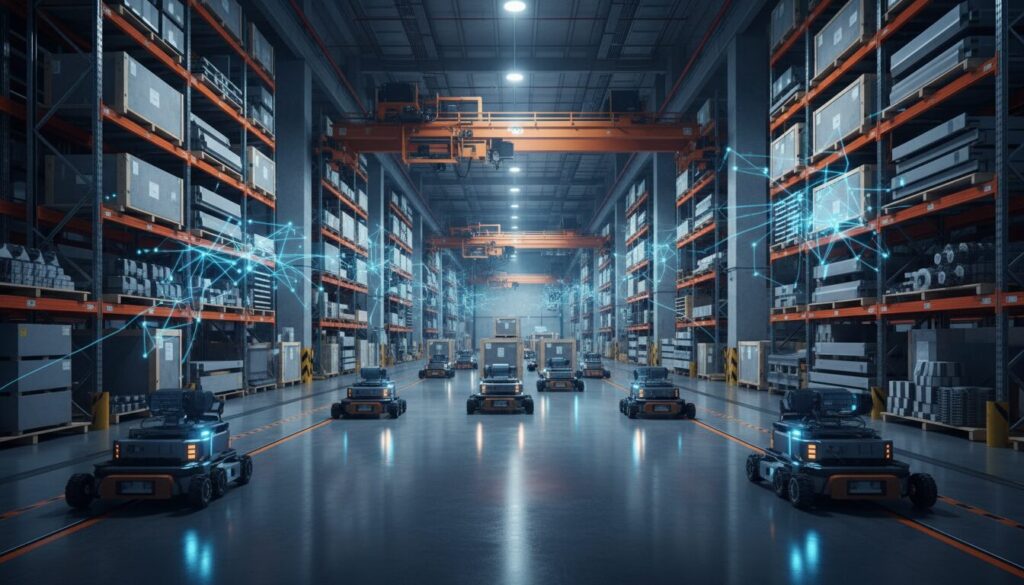
The era of the “everything store” for B2B industrial procurement is fading. In its place, a highly specialized, fintech-enabled vertical marketplace revolution is taking hold. The recent closing of SNAK Venture Partners’ oversubscribed $50 million debut fund is not just a financial headline; it is a critical signal that the digitization of the “hardest” sectors of the economy—supply chain, construction, and manufacturing—is entering a mature phase.
For logistics executives and procurement managers, this development suggests that the friction-heavy, relationship-based procurement models of the past are rapidly being dismantled by platforms that combine specialized inventory with embedded finance.
The Facts: SNAK Venture Partners Debut Fund
SNAK Venture Partners, a Chicago-based firm, has officially closed its Fund I. What makes this fund notable is not merely the capital amount, but the high-conviction thesis behind it: that legacy industries are finally ready for digital transformation if the financial architecture supports it.
Anchored by the Pritzker Group and led by veterans from Amazon and the Pritzker organization, SNAK is targeting the “holdouts” of the digital economy.
Key Data Points
| Category | Details |
|---|---|
| Fund Size | $50 Million (Oversubscribed) |
| Focus Area | Vertical B2B Marketplaces (Supply Chain, Construction, Packaging) |
| Investment Stage | Seed ($1M – $2M check size) |
| Target Volume | ~20 Startups over 3-4 years |
| Key Leadership | Seth Cohen (Ex-Amazon/Pritzker), Dan Star (Ex-Pritzker/Longview) |
| Portfolio Examples | Repackify (Packaging logistics), Big Rentals (Construction equipment) |
| Core Thesis | Vertical marketplaces succeed by integrating fintech to solve transaction friction in legacy industries. |
Why This Matters Now: The Fintech-Logistics Convergence
The logistics and industrial sectors have long resisted the “Uber-for-X” marketplace model. The reason was rarely a lack of demand, but rather the complexity of the transaction. Industrial buying involves net-30/60/90 payment terms, complex credit checks, and nuanced logistics coordination that consumer platforms could not handle.
SNAK’s entry into the market validates a shift toward Marketplace 2.0. These are not simple matchmakers connecting buyers and sellers. They are transactional platforms with embedded fintech layers that manage credit risk, payments, and compliance.
For the supply chain, this means the barrier to digitizing procurement for items like pallets, heavy machinery, and raw materials is disappearing. As discussed in our previous analysis, Agentic AI in Procurement: The Ultimate Transformation Guide, the future of procurement is moving beyond passive analytics to active execution. The platforms SNAK is funding are likely to become the digital environments where these AI agents execute trades.
Industry Impact: Who Wins and Who Adapts?
The deployment of this $50M fund into vertical marketplaces will create ripples across the supply chain ecosystem. Here is how different stakeholders will be affected.
Impact on Procurement and Shippers
The most immediate impact will be the democratization of access to specialized supplies. Currently, sourcing niche industrial goods (like specific packaging materials or construction rentals) requires a Rolodex of vendors and lengthy phone negotiations.
- Price Transparency: Vertical marketplaces force price discovery into the open. Shippers will no longer rely on opaque broker quotes.
- Speed to Source: Automated vetting and embedded finance allow for “one-click” style procurement for industrial goods.
- Supplier Diversification: These platforms allow shippers to tap into fragmented supplier networks without vetting each vendor individually.
See also: 5 Steps: A Tale of Two AI-Driven Procurement Transformations for insights on how organizations are restructuring to handle digital procurement flows.
Impact on Warehousing and Operations
One of SNAK’s early portfolio companies, Repackify, highlights a specific trend: the circular economy and reverse logistics. Repackify connects companies with used pallets and packaging, creating a marketplace for assets that often clog up warehouse space.
- Asset Liquidity: Warehouses can monetize idle assets (packaging, pallets, machinery) faster.
- Space Optimization: Efficient marketplaces for reverse logistics mean less “dead stock” sitting on the dock.
Impact on Legacy Distributors
Traditional industrial distributors face the highest risk. Their value proposition has historically been holding inventory and providing credit terms.
- Disintermediation Risk: If a marketplace connects the manufacturer directly to the buyer and handles the credit check (via fintech), the traditional distributor’s margin is squeezed.
- The “Holdout” Defense: Distributors must either join these platforms or build their own digital interfaces to compete with the speed of venture-backed marketplaces.
LogiShift View: The “So What?” for the Industry
The launch of SNAK’s fund is a microcosm of a larger trend: Verticalization is the antidote to complexity.
In the early 2020s, the logic was to build “one platform to rule them all.” In 2025 and beyond, the logic is “one platform that understands exactly how a specific industry trades.”
The “Fintech-First” Marketplace
The key insight from SNAK’s thesis is that in B2B logistics, payments are the product. A marketplace that lists construction equipment but requires a faxed credit application will fail. A marketplace that lists the equipment and instantly approves Net-60 terms via an algorithm will win.
We predict that the startups emerging from this fund will look less like “Craiglist for Logistics” and more like specialized banks that happen to move freight and goods. They will utilize transaction history data to underwrite risk that traditional banks refuse to touch.
Data Standardization as a Byproduct
To facilitate these transactions, these marketplaces must force data standardization. You cannot have an automated marketplace for pallets or rentals if every seller describes their inventory differently.
This drive toward standardized data attributes (SKUs, condition ratings, dimensions) will inadvertently clean up the “dirty data” problem that has plagued logistics for decades. This clean data becomes the fuel for AI-driven optimization.
Strategic Takeaway
The injection of $50 million into this specific thesis serves as a wake-up call for the industry.
For Logistics Executives
Do not view these new marketplaces merely as vendors. View them as infrastructure. Integrating with vertical marketplaces can reduce your procurement overhead and improve your working capital through their fintech offerings.
For Investors and Innovators
The “low hanging fruit” of general consumer marketplaces is gone. The value now lies in the deep, unsexy trenches of industrial supply chains. The winners will be those who can code the complex workflows of procurement managers into a seamless interface.
Action Plan
- Audit Your Spend: Identify categories (packaging, MRO, rentals) where procurement is still manual and opaque.
- Pilot Vertical Platforms: Test platforms like Repackify or similar niche marketplaces to benchmark against your current negotiated rates.
- Digital Readiness: Ensure your internal ERP systems are capable of API integration. The future of B2B buying is not a PO PDF sent via email; it is a system-to-system handshake.