
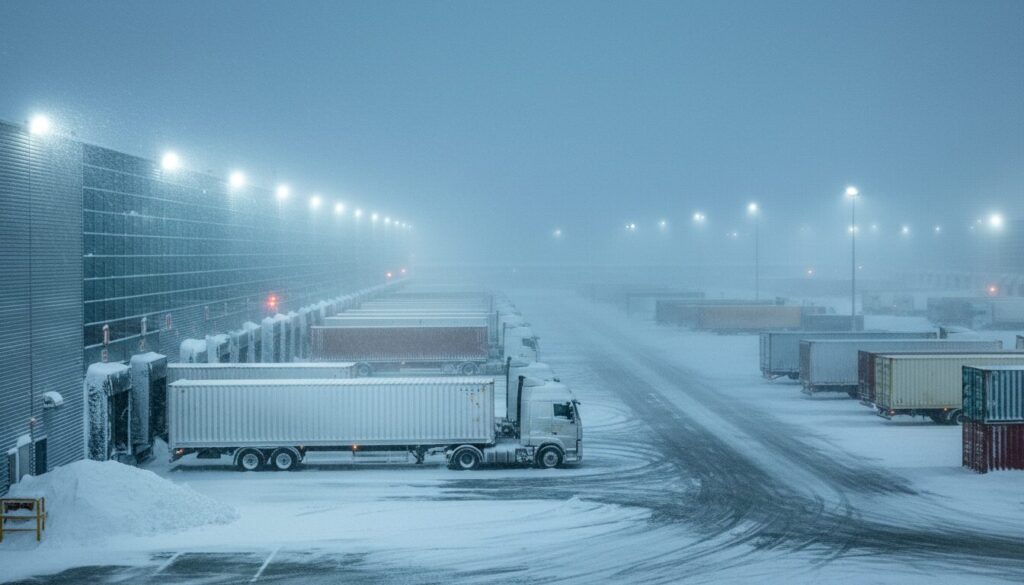
The U.S. logistics market is currently grappling with a severe disruption that goes far beyond typical seasonal delays. Winter Storm Fern has emerged as the most disruptive weather event in years, exposing critical vulnerabilities in a supply chain ecosystem that has been aggressively shedding capacity for months.
For logistics executives and supply chain managers, this is not merely a weather update; it is a market signal. The confluence of extreme weather and a structurally thinned carrier base has pushed tender rejections to a peak of 12.19%, a level not seen in recent memory. This sharp rise signals that the “buffer” of excess capacity—which shippers have relied on for the past year to keep rates low—has effectively evaporated.
This analysis dissects the immediate impacts of Winter Storm Fern, the structural weaknesses it has unveiled, and what this volatility means for market recovery timelines heading into March.
The Disruption by the Numbers
To understand the scale of the current crisis, we must look at the hard data. The market reaction has been swift and severe, indicating high sensitivity to disruption.
| Metric | Pre-Storm Status | Peak Storm Impact | Change | Implication |
|---|---|---|---|---|
| Tender Rejection Rate (STRI) | 9.75% | 12.19% | +2.44% | Carriers are rejecting 1 in 8 loads; contract compliance is failing. |
| National Truckload Index (NTI) | Stable | +3% Increase | +$0.07/mile (est) | Spot rates are rising rapidly as capacity exits the network. |
| Carrier Capacity Base | Declining Trend | 5,500+ Exits | Significant Reduction | The market lacks the “surge capacity” to absorb shocks. |
| Market Recovery Estimate | Late Feb | Mid-March | Delayed | Backlogs will keep capacity tight even after the ice melts. |
The “Perfect Storm” Dynamic
The severity of Winter Storm Fern lies not just in the temperature, but in the timing. The storm hit a market that had already seen over 5,500 operators exit recently. In previous years, a storm of this magnitude would be dampened by excess trucking capacity. Today, that capacity is gone.
This massive reduction in the carrier base means there is almost no buffer to absorb severe weather shocks. When roads close and equipment freezes, there are no backup trucks waiting in the wings. This structural deficit is the primary driver behind the immediate spike in rejection rates.
Industry Impact: The Ripple Effect
The disruption caused by Winter Storm Fern is creating distinct pressure points across the supply chain triad: Shippers, Carriers, and Manufacturers.
Impact on Shippers and Logistics Managers
For shippers, the immediate pain point is contract failure. A tender rejection rate climbing past 12% indicates that primary carriers are unable (or unwilling) to service committed freight.
- Spot Market Exposure: Shippers are being forced to tap into the spot market at a premium. The nearly 3% rise in the National Truckload Index (NTI) directly translates to blown transportation budgets for February.
- Performance Metrics: On-time delivery (OTD) scores are plummeting. Executives must proactively communicate these delays to customers to manage expectations, as this is a systemic failure, not a vendor-specific one.
The Carrier Reality: Freeze and Costs
While rising rates might seem beneficial for carriers, the operational reality is brutal. The NTI increase is largely a reflection of increased operating costs and reduced network efficiency rather than pure profit taking.
- Equipment Failure: Extreme cold leads to diesel gelling, frozen air brake lines, and battery failures. A truck sitting idle due to mechanical freeze is a revenue loss that higher rates struggle to offset.
- Network Velocity: The slowing of network velocity is the silent killer. A trip that takes two days now takes four. This effectively cuts available capacity in half for that specific lane, further driving up the supply-demand imbalance.
Manufacturing and Warehousing: The Caterpillar Effect
The industrial impact is significant. Major closures at manufacturing plants, such as those reported at Caterpillar, create a “void” in the supply chain followed immediately by a “surge.”
- Production Ripples: When a major plant closes, inbound raw materials pile up at origin, and outbound finished goods are delayed.
- The Bullwhip Effect: Once these facilities reopen, they will attempt to make up for lost time, flooding the market with freight demand simultaneously. This surge will likely extend the high-rate environment well into March, delaying the stabilization of the market.
LogiShift View: The Structural Warning
At LogiShift, we believe Winter Storm Fern is more than a temporary inconvenience; it is a stress test that the U.S. trucking market has failed. This event validates our analysis regarding the fragility of the current capacity landscape.
The “False Capacity” Narrative
For the past year, shippers have operated under the assumption that capacity is abundant. This storm proves that this abundance was fragile. The aggressive exit of 5,500+ operators has tightened the market’s belt significantly.
As we discussed in our analysis of 2026 Trucking Capacity: Why It Tightens & Who Wins, the market is heading toward a structural tightening. Winter Storm Fern is a preview of what the market looks like without a capacity buffer. The “slack” is gone.
The Delayed Recovery Slingshot
Our projection is that the market will not “snap back” to normal immediately after the temperatures rise.
- Backlog Clearance: The first week of better weather will be spent clearing the backlog of freight from plant closures.
- Network Rebalancing: Trucks are currently out of position. It will take 7-10 days for equipment to cycle back into correct lanes.
- March Madness: We predict that the recovery will be delayed until mid-to-late March. Shippers should expect elevated rejection rates to persist for weeks, not days.
Strategic Takeaway: What Companies Should Do Next
Executives cannot control the weather, but they can control their reaction to the volatility it creates. The following steps are recommended to mitigate the impact of the current disruption and prepare for the post-storm recovery.
Immediate Actions (Next 7 Days)
- Accept Spot Premiums: Do not waste time negotiating pennies on the dollar in the spot market right now. Capacity is scarce; secure it immediately to keep critical lines moving.
- Triage Freight: Prioritize shipments that prevent line-down situations at manufacturing plants. De-prioritize stock replenishment that can wait until the backlog clears.
Mid-Term Strategy (March Recovery)
- Review Route Guides: Identify which carriers failed you during the storm and which ones communicated proactively. Use this data for upcoming RFP discussions.
- Adjust Lead Times: extend planned lead times by 24-48 hours in your ERP systems for the next three weeks to account for the lingering network velocity reduction.
Long-Term Planning
The exit of small operators is a trend, not a blip. The buffer that protected shippers from volatility in 2023 is disappearing.
- Secure Core Capacity: As highlighted in our article on 2026 Trucking Capacity, the long-term play is to secure committed capacity with asset-based carriers who can weather the storms—both meteorological and economic.
Winter Storm Fern is a wake-up call. The market has shifted, and the “easy” capacity environment is ending. Shippers who recognize this structural change now will be the ones who succeed when the next disruption hits.