The autonomous trucking landscape is shifting rapidly from experimental pilots to financial industrialization. With the U.S. Securities and Exchange Commission (SEC) declaring the registration statement effective on January 12, 2026, Plus (formerly PlusAI) has cleared the final regulatory hurdle to list on the Nasdaq via a merger with Churchill Capital Corp IX.
For logistics executives, this is not merely financial news—it is a critical signal. The capital injection from this listing (Ticker: PLS) is explicitly earmarked to fuel the commercial launch of factory-integrated autonomous trucks by 2027. After years of speculation, the industry now has a concrete timeline for the arrival of scalable Level 4 (L4) freight operations.
This analysis breaks down the implications of the Plus listing, the strategic shift toward OEM integration, and what supply chain leaders must do to prepare for the 2027 rollout.
The Facts: PlusAI’s Path to Public Markets
Before analyzing the impact, it is essential to understand the current status of the deal and the operational timeline. The merger values the combined entity significantly and provides the liquidity necessary to bridge the gap between “development” and “deployment.”
Key Deal Mechanics & Timeline
The SPAC merger with Churchill Capital Corp IX is moving rapidly toward closure.
| Component | Detail |
|---|---|
| New Ticker Symbol | PLS (Nasdaq) |
| SEC Status | Registration declared effective Jan 12, 2026 |
| Shareholder Vote | Scheduled for February 3, 2026 |
| Primary Goal | Fund commercial launch of L4 trucks by 2027 |
| Core Technology | SuperDrive (L4 Autonomous System) |
| Key Markets | United States (Texas corridor), Europe (via Traton/Iveco) |
The “Factory-First” Strategy
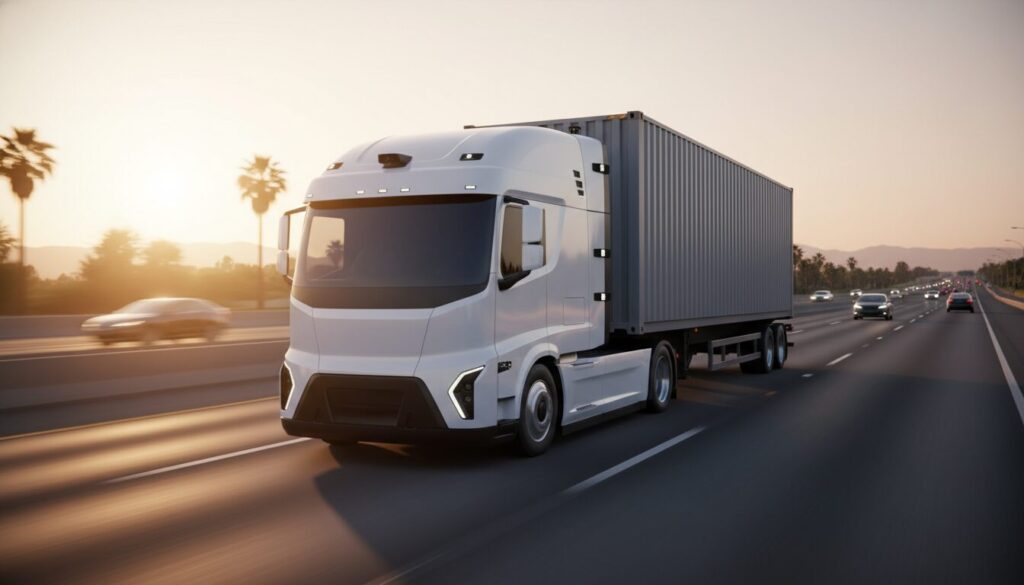
Unlike early autonomous trucking startups that focused on retrofitting existing fleets, Plus has pivoted to a factory-integrated model. By partnering directly with global OEMs—including Traton Group (Scania, MAN), Iveco, and Hyundai—Plus aims to produce trucks where the autonomous hardware is installed on the assembly line.
This distinction is vital. Factory integration ensures higher reliability, redundant safety systems (steering, braking) built into the chassis, and standardized maintenance protocols—factors that are non-negotiable for enterprise carriers.
Industry Impact: The Ripple Effect of Capitalization
The public listing validates the autonomous trucking sector at a time when other AV initiatives are also gaining traction, such as the Tesla Robotaxi Austin Launch, which demonstrated the viability of driverless operations in complex urban environments. For freight, the impact of PlusAI’s capitalization will be felt across three primary sectors.
1. For Carriers: The Shift from OpEx to CapEx
The chronic driver shortage has long been the bottleneck of the trucking industry. The commercialization of Plus’s SuperDrive technology signifies a fundamental shift in business models.
- Asset Utilization: Human-driven trucks are limited by Hours of Service (HOS) regulations (typically 11 hours of driving). An L4 autonomous truck can theoretically operate near 24/7, stopping only for fueling and maintenance.
- Cost Structure: Carriers will move from high variable costs (driver wages, insurance premiums based on human error) to higher upfront capital costs (autonomous tech) with significantly lower operating margins over the vehicle’s life.
2. For Shippers: Redefining “Just-in-Time”
Shippers utilizing high-volume corridors, such as the Texas triangle or routes connecting Southern Europe to Northern distribution hubs, will see the immediate benefits of the 2027 rollout.
- Predictability: Autonomous trucks remove human variability—no fatigue, no sick days, and consistent driving speeds optimized for fuel efficiency.
- Speed: Cross-country shipments that currently take 3-4 days due to driver rest breaks could be completed in under 48 hours.
3. For Warehouse Operators: The Rise of Transfer Hubs
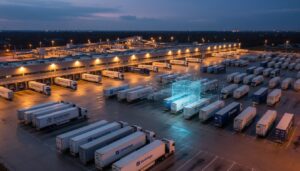
The L4 model Plus is pursuing initially targets “hub-to-hub” autonomy. This requires highway-adjacent transfer hubs where human drivers handle the “first mile” and “last mile,” while the AV handles the long-haul middle mile.
- Infrastructure Demands: Warehouses located near major interstate off-ramps will become premium real estate.
- 24/7 Gates: As trucks begin arriving at all hours of the night (to maximize AV uptime), distribution centers must adapt staffing models to handle automated ingress and egress 24/7.
LogiShift View: Why 2027 is the Tipping Point
While headlines often focus on the technology, the LogiShift analysis suggests that the OEM partnerships are the true differentiator for Plus.
The “Tier 1” Advantage
Many autonomous startups failed because they could not manufacture trucks. Plus has effectively outsourced the vehicle manufacturing to experts like Scania and Hyundai. This “asset-light” approach to production, coupled with the capital from the Nasdaq listing, reduces the risk of production hell.
This strategy mirrors successful global expansion tactics seen in other sectors. For instance, as discussed in our MINIEYE Case Study, success in the autonomous space often relies on adaptable “Overseas 2.0” strategies—partnering with local entities and adapting to regional needs rather than forcing a one-size-fits-all model. Plus is applying this by leveraging Traton for Europe and other partners for the U.S.
The Regulatory Tailwind
The timing of the SEC clearance (Jan 2026) aligns with a maturing regulatory environment. With real-world trials already active in Texas and Spain, the data gathered between now and the 2027 commercial launch will likely form the basis for the final safety standards required for driver-out operations.
Critical Prediction
We predict that 2027 will create a bifurcation in the freight market. Early adopters who integrate L4 lanes into their network will begin to offer “Express Autonomous” tier pricing—faster than team drivers but cheaper than air freight. Companies that delay adoption may find themselves competing for a shrinking pool of human drivers for long-haul routes that nobody wants to drive.
Takeaway: Strategic Moves for 2026
The Nasdaq listing makes PlusAI’s timeline credible. Supply chain leaders should use the remainder of 2026 to prepare for the 2027 commercialization.
- Audit Your Lanes: Analyze your freight network to identify “middle-mile” routes that align with PlusAI’s operational corridors (e.g., I-10, I-45 in the US). These are your prime candidates for early AV adoption.
- Evaluate Infrastructure: If you own terminals, assess their readiness for autonomous handoffs. Do you have the space for a transfer hub?
- Monitor the Ticker (PLS): Post-listing, Plus’s quarterly reports will provide the most accurate barometer of the technology’s maturity. Look for metrics on “disengagement rates” and “OEM production volume.”
The era of “what if” is ending. With capital secured and factories preparing, the era of “how many and how soon” has begun.
See also: