Introduction
Are your operation costs rising due to preventable product returns? Are you struggling to maintain high quality standards while facing a chronic labor shortage?
These are the nightmares keeping logistics and operations leaders awake at night. In the past, increasing quality meant slowing down production or hiring more inspectors—resources that are scarce in today’s market. You were forced to choose between speed and accuracy.
But that trade-off is vanishing.
We are witnessing a paradigm shift. Artificial Intelligence (AI) and Computer Vision are not just “improving” inspection; they are fundamentally changing the methodology. This article explains how AI is rewriting the rules of quality inspection, transforming it from a bottleneck into a competitive advantage.
The New Standard: From Human Eyes to AI Vision
To understand how AI is rewriting the rules of quality inspection, we must first look at what has changed technologically.
Traditionally, quality control (QC) relied on two methods:
- Manual Inspection: Humans visually checking items. This is prone to fatigue and inconsistency.
- Rule-Based Machine Vision: Cameras programmed with strict rules (e.g., “measure this diameter”). If a defect falls outside the pre-programmed rule (like a scratch in an unexpected location), the system misses it.
What is AI-Driven Quality Inspection?
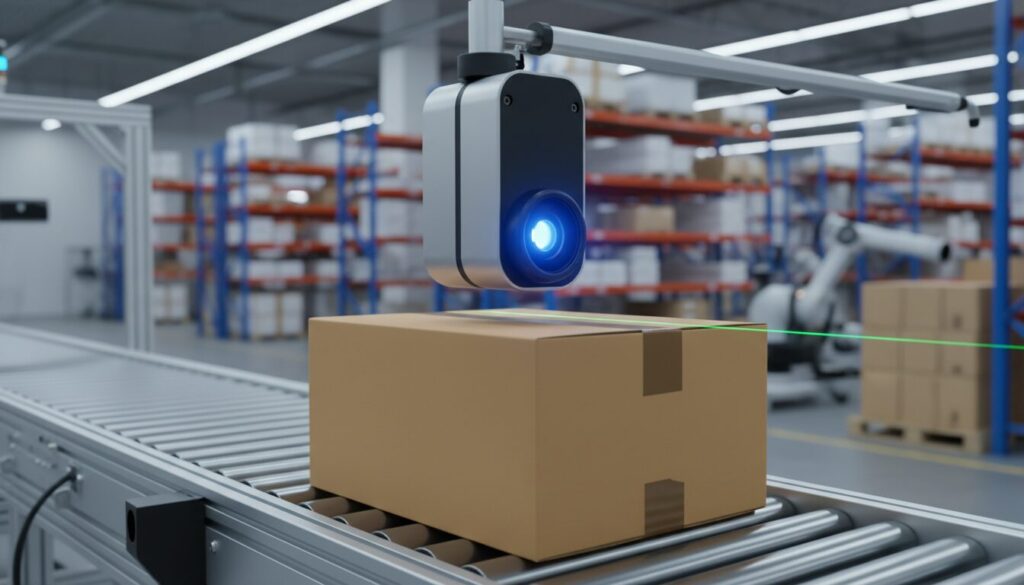
AI inspection uses Deep Learning and Computer Vision. Unlike rule-based systems, you do not explicitly program every possible defect. Instead, you “train” the AI by showing it thousands of images of “good” products and “bad” products.
The AI learns to recognize patterns, textures, and anomalies much like a human does, but with superhuman consistency and speed.
The Core Shift
The fundamental “rewrite” of the rules looks like this:
| Feature | Old Rule (Traditional) | New Rule (AI-Driven) |
|---|---|---|
| Coverage | Random Sampling (e.g., 1 in 100) | 100% Inspection of every unit |
| Detection | Explicitly defined defects only | Unforeseen anomalies & variations |
| Speed | Limited by human reaction time | Matches maximum line speed |
| Data | Binary (Pass/Fail) | Granular data on why it failed |
For a deeper look at how AI vision is adapting to unstructured environments, see our analysis in Inbolt’s On-Arm AI: A New Era for Flexible Automation.
Why Now? The Drivers Behind the Shift
Why is this technology exploding in popularity right now? It is not just hype; it is a response to critical market pressures.
1. The “Zero-Defect” Expectation
E-commerce and Just-In-Time (JIT) manufacturing have made customers intolerant of errors. A single defective unit can disrupt a supply chain or ruin a brand’s reputation on social media. The market demands perfection, which manual sampling cannot guarantee.
2. Labor Scarcity
The logistics and manufacturing sectors are facing a global labor shortage. Finding qualified staff to perform repetitive, high-focus inspection tasks is becoming impossible. AI fills this gap, allowing human workers to move to higher-value roles.
3. Complexity of Products
Products are becoming more complex and customized. Traditional rule-based cameras cannot handle high variety. AI models, however, can handle high-mix, low-volume production lines effectively.
Quantitative and Qualitative Benefits
Implementing AI for quality inspection delivers measurable ROI. Here is how it impacts the bottom line.
Improved Defect Detection Rates
Human inspection accuracy typically hovers around 80-90% due to fatigue. AI systems consistently achieve 99.9% accuracy.
- Result: Drastic reduction in returns and warranty claims.
Real-Time Process Optimization
This is where the rules are truly rewritten. AI doesn’t just reject a bad part; it generates data. If the AI detects a recurring scratch on the left side of a package, it can alert the system that a specific upstream machine is misaligned.
This aligns with the concept of “Industrial Nervous Systems,” which connect factory metrics to financial ROI. For more on this financial alignment, read CVector $5M Funding: Impact on Operational Economics.
Reduced False Rejects (Overkill)
Traditional sensors often reject good parts because of minor, acceptable variations (like a slight color change). AI understands context. It knows that a slight color variance is acceptable, but a crack is not.
- Result: Less waste and higher yield.
Predictive Maintenance
By analyzing inspection data trends, AI can predict when a machine is about to fail before it creates defective products.
This proactive approach is crucial for maintaining throughput. See also: Festo’s New AI Platform Optimizes Automation Uptime.
5 Steps to Implementing AI Quality Inspection
Transitioning to AI-driven inspection requires a strategic approach. It is not a “plug and play” solution; it is a process.
1. Define the “Killer” Defect
Do not try to solve everything at once. Identify the one defect type that costs you the most money (e.g., mislabeling, structural cracks, or missing components). Focus your pilot project there.
2. Gather High-Quality Data
AI is only as good as the data it is fed. You need a robust dataset of images:
- Good Images: Show the product in various lighting and angles.
- Bad Images: You need examples of real defects.
- Tip: Sometimes creating “synthetic data” (digitally generated defects) helps if you have a low defect rate historically.
3. Choose the Right Hardware
Software needs eyes. Ensure your cameras have the resolution and frame rate necessary to capture the product at full line speed. Lighting is equally important; consistent lighting reduces the burden on the AI model.
4. Integration with WMS/MES
The AI system must talk to your Warehouse Management System (WMS) or Manufacturing Execution System (MES). When a defect is found, the system should automatically divert the item without stopping the line.
5. Monitor and Retrain
After deployment, the model will encounter new variations. You must have a “human in the loop” workflow where ambiguous cases are reviewed by a human, and that decision is fed back into the AI to make it smarter.
Conclusion
The question is no longer if you should automate quality control, but how quickly you can adapt.
How AI is rewriting the rules of quality inspection boils down to a shift from reactive to proactive operations.
- Old Rule: Inspect to find mistakes.
- New Rule: Inspect to prevent mistakes and optimize processes.
For logistics leaders, the path forward is clear. Start with a specific pain point—perhaps a high-return item or a bottlenecked packing station—and apply AI vision. The technology is accessible, the ROI is proven, and the competitive advantage is significant.
Recommended Next Steps
- Audit your current return rates to identify the most costly defects.
- Review your current visual inspection stations for bottlenecks.
- Explore AI vision vendors that specialize in your specific vertical (e.g., packaging, automotive, electronics).
By embracing these new rules, you ensure your operations are resilient, efficient, and ready for the future of logistics.