
Introduction: The “Analysis Paralysis” Trap in Logistics
Imagine this scenario: It is 2:00 PM on a Tuesday. Your logistics dashboard flashes red. A critical shipment from Southeast Asia is delayed due to a storm. Your ERP system gives you this insight perfectly. It tells you exactly which SKU is late and how it affects your inventory.
However, by the time you see this alert, convene a meeting, analyze alternative routes, and get approval for expedited air freight, 24 hours have passed. The opportunity to mitigate the cost is gone.
This is the reality for many operations leaders today. You are swimming in data but drowning in latency. You face rising fuel costs, chronic labor shortages, and consumer demands for instant delivery. The problem isn’t a lack of information; it is the gap between knowing something is wrong and doing something about it.
This article introduces the solution to closing that gap: From Insight to Action: The Agentic Supply Chain.
We will explore how the next generation of logistics technology moves beyond passive dashboards to active, autonomous agents that execute decisions, saving you time and protecting your margins.
Basics: What is From Insight to Action: The Agentic Supply Chain?
To understand the “Agentic Supply Chain,” we must first clarify the evolution of supply chain technology. For the past decade, the focus has been on visibility—tracking dots on a map.
The Agentic Supply Chain represents the shift from monitoring to executing.
In an agentic system, AI “agents” are given the authority to perform tasks within set parameters. They do not just flag a delay; they rebook the shipment, update the customer, and adjust the warehouse labor schedule automatically.
The Core Difference: Passive vs. Agentic
The following table illustrates the fundamental shift from traditional insight-based models to agentic action models.
| Feature | Traditional Supply Chain | Agentic Supply Chain |
|---|---|---|
| Primary Function | Reporting & Alerting | Decision & Execution |
| Human Role | Analyze data, make decisions | Set strategy, handle exceptions |
| Response Speed | Hours to Days | Seconds to Minutes |
| Data Usage | Historical analysis | Real-time predictive action |
| Outcome | Insight (What happened?) | Action (Problem solved) |
How It Works
An agentic system relies on Large Language Models (LLMs) and advanced reinforcement learning. These agents understand context.
For example, if a supplier raises prices:
- Passive AI sends you an email: “Price increased by 5%.”
- Agentic AI analyzes the market, checks your approved vendor list, negotiates a better rate with a secondary supplier, and places the order—only notifying you if the variance exceeds a threshold you set.
This capability is already transforming specific sectors. As discussed in our previous guide, Agentic AI in Procurement: The Ultimate Transformation Guide, procurement is one of the first areas seeing this shift, moving from simple spend analysis to autonomous negotiation.
Why Now? The Urgency of Agentic Adoption
Why is “From Insight to Action: The Agentic Supply Chain” trending now? It is not just hype; it is a response to structural changes in the global market.
1. Complexity Beyond Human Scale
Modern supply chains generate terabytes of data daily. No human team can analyze weather patterns, geopolitical shifts, traffic data, and inventory levels simultaneously in real-time.
Structural volatility is becoming the norm. As highlighted in 5 Supply Chain Management Trends 2026: New Strategy, leaders must build strategies that thrive on global change. Agentic systems are the only tool capable of matching this speed of change.
2. The Maturation of Generative AI
Until recently, AI was good at numbers but bad at “reasoning.” The explosion of Generative AI allows systems to process unstructured data (emails, contracts, news reports) and make logical decisions.
This shift is also happening in the physical world. The software “brain” is now intelligent enough to guide hardware. For instance, the 1X World Model: Critical Shift for Logistics AI demonstrates how AI is moving from rigid programming to actually understanding its environment, a prerequisite for true agency.
3. Chronic Labor Shortages
The logistics industry faces a massive talent gap. There are not enough planners, drivers, or warehouse managers.
Agentic supply chains act as a force multiplier. By automating the routine “action” layer, your existing team can focus on high-value strategic initiatives rather than fire-fighting.
Benefits: The Value of Autonomous Action
Adopting a strategy that moves From Insight to Action: The Agentic Supply Chain delivers measurable ROI.
Quantitative Advantages
-
Reduced Expediting Costs:
Agents predict delays and reroute shipments via standard freight before the situation becomes critical, avoiding expensive last-minute air charters. -
Inventory Optimization:
By autonomously balancing stock between distribution centers based on real-time demand signals, companies can reduce safety stock levels by 15-20%. -
Labor Efficiency:
Physical automation allows for scalable operations. For a prime example of this scale, see the Schaeffler Deploys Hundreds of Humanoids: Innovation Case, where humanoid robots are taking over repetitive tasks on a massive scale.
Qualitative Advantages
-
Faster Decision Loops:
The time between a disruptive event (e.g., a port strike) and a mitigation strategy (e.g., rerouting) is reduced to near zero. -
Employee Satisfaction:
Logistics professionals burn out when they spend their days fixing manual errors. Agentic systems handle the grunt work, allowing humans to be creative problem solvers. -
Customer Trust:
Proactive communication and reliable delivery build stronger client relationships.
Implementation: How to Deploy the Agentic Supply Chain
Moving From Insight to Action: The Agentic Supply Chain is not a “flip the switch” process. It requires a phased approach.
Step 1: Establish the Data Foundation
Agents cannot act on bad data. If your inventory accuracy is 70%, an autonomous agent will make wrong decisions 30% of the time—but faster.
- Cleanse Data: Ensure Master Data Management (MDM) is robust.
- Integrate Silos: Your WMS (Warehouse Management System), TMS (Transportation Management System), and ERP must talk to each other.
Step 2: Define “Guardrails”
You do not want an AI agent ordering $1 million of inventory by mistake. You must set strict parameters for autonomy.
- Thresholds: “Agent can reorder up to $5,000 without human approval.”
- Escalation Protocols: “If margin impact is >2%, flag for human review.”
Step 3: Start with Physical Automation
Often, the easiest entry point is the warehouse floor, where the environment is controlled.
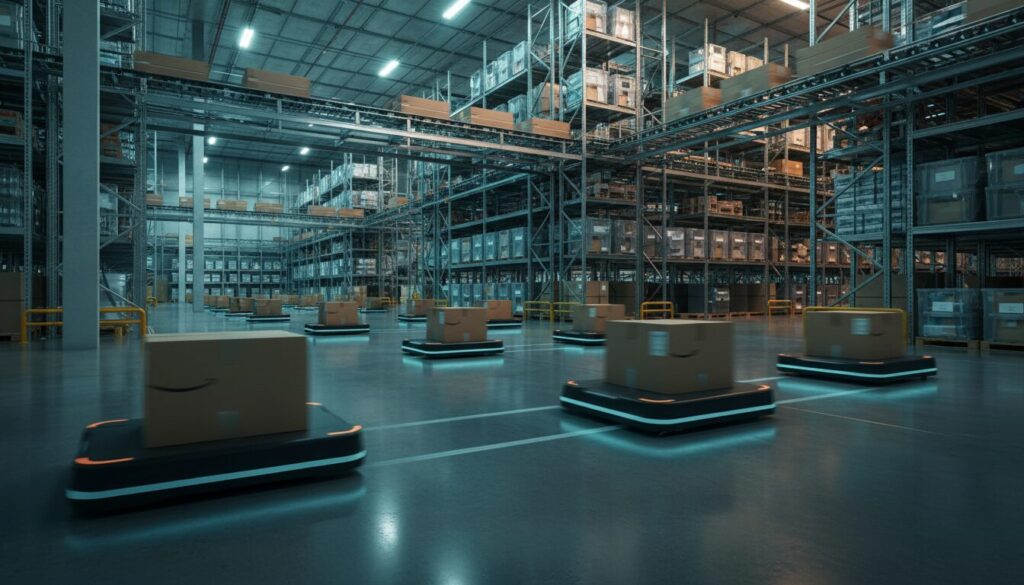
Robotics is a key component of the agentic chain. According to the IFR Names Top 5 Global Robotics Trends of 2026 for Logistics, autonomy is critical. Deploying Autonomous Mobile Robots (AMRs) that decide their own paths based on congestion is a form of agentic behavior.
Step 4: Pilot “Digital Agents” in Planning
Select one specific workflow to automate.
- Example: Transport scheduling.
- Goal: Allow the agent to select carriers and book slots automatically for standard shipments.
- Measure: Compare the cost per mile and on-time performance against human-planned shipments.
Common Pitfalls to Avoid
- Over-trusting the AI: Always maintain a “human in the loop” for the first 6-12 months.
- Ignoring Change Management: Staff may fear job loss. Explain that agents are “co-pilots,” not replacements.
- Fragmented Systems: An agent that can see the warehouse but not the transport schedule will make sub-optimal decisions.
Conclusion: The Future is Active, Not Passive
The era of simply observing supply chain disruptions is over. The concept of From Insight to Action: The Agentic Supply Chain is the new standard for operational excellence.
By empowering intelligent agents to execute tasks, logistics leaders can regain control over their operations. The shift allows you to stop looking at the past (reporting) and start shaping the future (autonomous execution).
Recommended Next Steps:
- Audit your decision latency: How long does it take to act on a critical alert?
- Identify low-risk workflows: Find repetitive tasks (like invoice matching or carrier booking) suitable for agentic pilots.
- Investigate robotics: Explore how physical agents fit into your strategy, referencing the IFR Names Top 5 Global Robotics Trends of 2026 for Logistics.
The technology is ready. The question is, are you ready to let go of the wheel and let the agentic supply chain drive efficiency?