The race for industrial autonomy just received a significant injection of sovereign capital. The European Investment Bank (EIB) has finalized a €50 million ($58.7 million) loan to Comau, a global leader in industrial automation based in Italy. While headlines often focus on consumer-facing AI, this financial commitment signals a pivotal shift in the infrastructure of global supply chains.
For logistics executives, this is not merely a regional banking transaction. It is a strategic flare indicating where the European Union believes the future of value chains lies: within flexible, AI-driven robotics and the circular economy of battery recycling. As supply chains continue to fracture under geopolitical tension and labor shortages, the EIB’s move to back “Made in Europe” automation technology suggests a future where warehousing and manufacturing are less dependent on human labor density and more reliant on intelligent, adaptive machines.
This analysis dissects why the EIB invests $58.7M into Comau’s Italian facilities and what this acceleration in R&D means for the logistics and supply chain sectors globally.
The Facts: Deconstructing the Deal
To understand the downstream effects on logistics, we must first look at the structure of this investment. The funding is backed by the InvestEU program, a flagship initiative designed to trigger more than €372 billion in additional investment over the period 2021-27. This specific tranche targets Comau’s Research and Development activities through 2027.
The investment is not for maintaining the status quo; it is explicitly earmarked for “innovation projects.” Comau is moving beyond traditional heavy industrial arms into the realm of cognitive robotics—machines that “see” and “think.”
Investment Snapshot
| Component | Detail |
|---|---|
| Principal Investor | European Investment Bank (EIB) via InvestEU |
| Recipient | Comau S.p.A. (Stellantis group) |
| Deal Value | €50 Million ($58.7 Million) |
| Timeline | R&D Roadmap through 2027 |
| Primary HQ | Turin, Italy |
| Key Technologies | Collaborative Robots (Cobots), AGVs, Battery Recycling, Digital Twins |
| Strategic Goal | Reduce energy consumption, enhance worker safety, bolster EU competitiveness |
The Core R&D Focus Areas
The capital injection is directed toward three specific pillars that directly impact logistics operations:
- Turnkey Battery Solutions: developing automated systems for the assembly and, crucially, the disassembly and recycling of electric vehicle (EV) batteries.
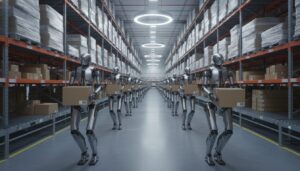
- Advanced Robotics: Creating sensor-heavy mobile robots (AGVs and AMRs) capable of operating in unstructured environments (like chaotic warehouse floors) without heavy infrastructure modification.
- Digital Manufacturing: Utilizing the “CONVERGING” project to integrate AI with hardware, allowing for on-demand supply chain adjustments.
Industry Impact: The Ripple Effect on Logistics
The injection of $58.7M into Comau is set to ripple through the logistics ecosystem, altering how carriers, warehouse operators, and shippers approach their infrastructure.
1. The Warehouse: From Rigid to Liquid Automation
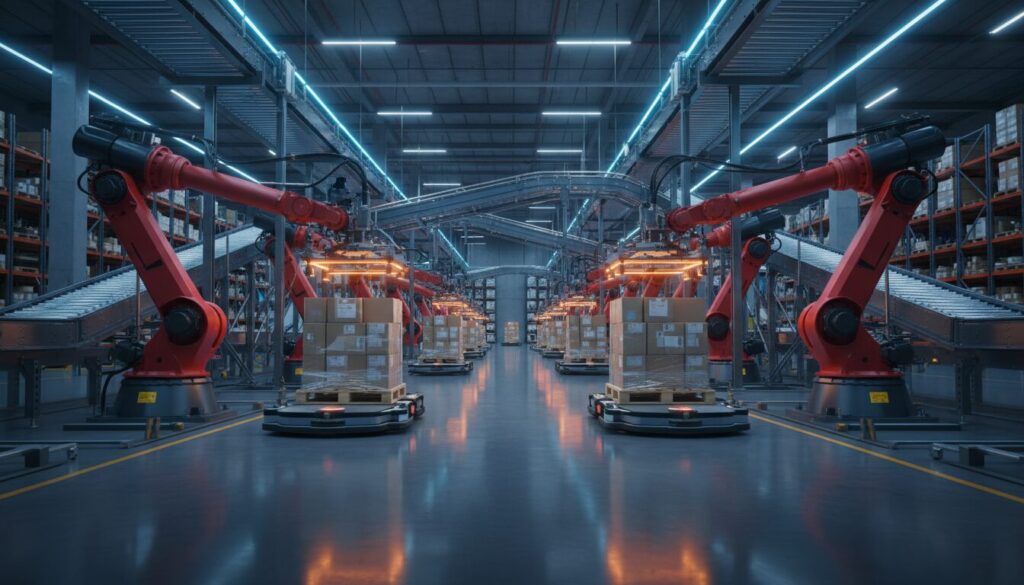
Traditionally, automation in logistics meant bolting heavy conveyors to the floor—a high-CapEx, low-flexibility decision. Comau’s R&D focus on the “CONVERGING” project aims to change this. By developing advanced robotic geometries and Autonomous Mobile Robots (AMRs), Comau is pushing for “liquid” automation.
For warehouse managers, this technological leap implies:
- Brownfield Viability: Older warehouses that cannot support heavy conveyor systems can be automated using Comau’s emerging fleet of autonomous units that require no physical guide rails.
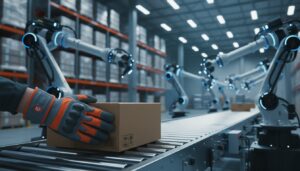
- Peak Season Scalability: Instead of building capacity for peak volume and letting it sit idle, logistics centers can deploy rental fleets of cobots that integrate seamlessly with human workers during surges.
- Reduced Error Rates: The “digital twin” aspect of this investment allows 3PLs to simulate workflow changes virtually before physical implementation, reducing downtime risks during retrofits.
2. The Reverse Supply Chain: Solving the Battery Crisis
Perhaps the most critical aspect of this news for the logistics sector is the focus on battery recycling. As the EV market matures, the logistics of end-of-life batteries is becoming a massive bottleneck. These batteries are hazardous, heavy, and difficult to transport.
Comau is using this funding to automate the dismantling of batteries. This impacts the industry by:
- Creating New Logistics Loops: We will see the rise of regional “disassembly hubs.” Logistics providers will need to manage the flow of spent batteries to these hubs and the flow of raw recovered materials out.
- Safety Standardization: Automated handling reduces the risk of thermal runaway during the breakdown process, allowing logistics carriers to handle these goods with lower insurance premiums and higher safety assurances.
3. Shippers and Manufacturers: The Shift to On-Demand
For shippers, the EIB’s investment supports the concept of “near-shoring” through efficiency. High labor costs in Europe have historically driven manufacturing to Asia. However, Comau’s advanced automation aims to lower the unit cost of production within Europe.
- Shorter Lead Times: If manufacturing becomes cost-competitive in Italy/Europe via robotics, shippers can source locally, drastically reducing transit times and inventory carrying costs.
- Customization at Scale: The AI integration allows production lines to switch between products rapidly. Logistics providers must prepare for smaller, more frequent shipments of varied SKUs rather than massive bulk movements of identical items.
LogiShift View: The “So What?”
While the face value of the news is a loan for better robots, the underlying narrative is about Industrial Sovereignty and Data Continuity.
The Democratization of Industrial AI
The EIB invests $58.7M into Comau’s Italian facilities not just to build hardware, but to bridge the gap between human labor and digital execution. The “LogiShift” analysis suggests that Comau is positioning itself to be the “Android” of industrial automation—providing flexible platforms that allow mid-sized logistics companies to automate without the multi-million dollar entry barriers of the past.
The Rise of the “Converged” Worker
The explicit mention of the EU’s CONVERGING project is vital. This initiative looks at the symbiosis between humans and machines. In the logistics context, we predict a shift in workforce training. The “warehouse picker” role will fade, replaced by the “robot pilot.”
- Prediction: By 2027 (the end of this funding roadmap), we expect to see “Cobot-Native” warehouses where human entry is limited to supervision, increasing throughput density by 40% compared to current mixed-environment facilities.
The Circular Economy as a Logistics Service
We believe this investment validates the “Circular Economy” as the next major profit center for logistics. Comau’s tech will likely be licensed to major 3PLs who will offer “return-to-raw-material” services. Logistics companies will no longer just move a product; they will be responsible for its automated reincarnation.
Takeaway: Strategic Moves for Executives
The EIB’s financial backing of Comau serves as a barometer for the industry’s direction. Logistics leaders should take the following actions:
- Audit for Flexibility: Review your current automation roadmap. If you are investing heavily in fixed infrastructure (conveyors/sorters), pause. Assess whether AMR/Cobot solutions (like those Comau is developing) offer better long-term ROI and flexibility.
- Prepare for Heavy Reverse Logistics: If you service the automotive or electronics sectors, begin mapping out partnerships for battery recycling logistics. The capacity to handle hazardous reverse flows will be a key differentiator by 2026.
- Invest in “Digital Twin” Capabilities: Comau’s push for digitalization emphasizes simulation. Logistics managers should adopt digital twin software to test supply chain resilience against the very disruptions that automation seeks to mitigate.
Final Thought: The EIB invests $58.7M into Comau’s Italian facilities not to save the past, but to build a firewall against future inefficiencies. In a world where labor is scarce and supply chains are fragile, the robot is no longer a luxury—it is the prerequisite for survival.