
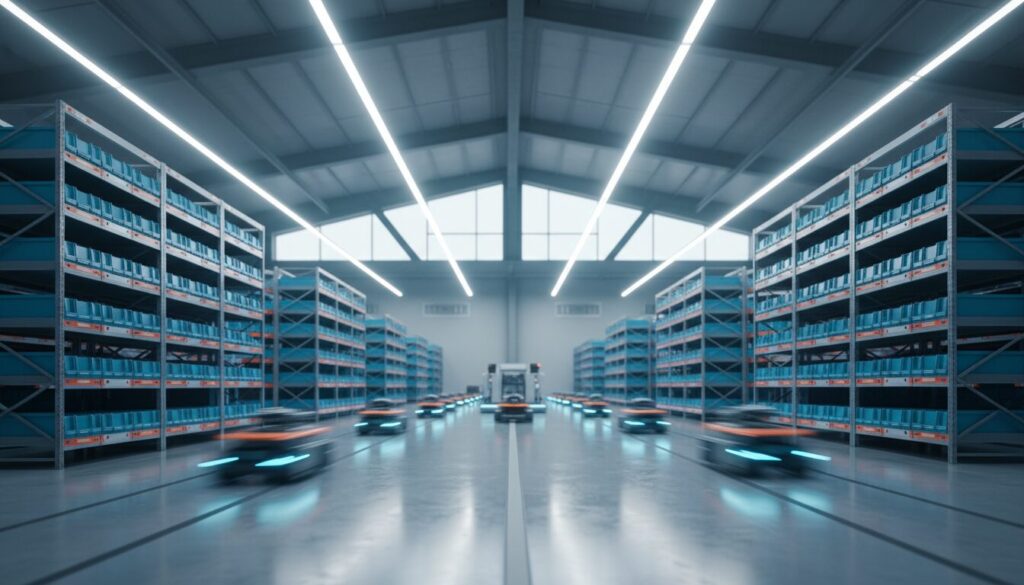
The pendulum of global supply chain strategy is swinging once again. As we approach the close of 2025, a distinct macroeconomic signal is flashing across dashboard monitors in logistics control towers from Shanghai to Rotterdam: the era of the massive “Just-in-Case” safety stock is ending.
For the past four years, driven by pandemic scars and geopolitical instability, corporations hoarded inventory. Warehouses burst at the seams as Strategy Executives prioritized product availability over working capital efficiency. However, Q4 2025 data paints a starkly different picture. U.S. import volumes are softening, and warehouse utilization rates are ticking downward.
We are witnessing a critical pivot: a transition from Buffer Stock strategies back to Lean Inventory models. But this is not a return to the fragile “Just-in-Time” of 2019. It is a new, high-stakes game of “Strategic Agility” driven by stagflation fears.
Why It Matters: The Stagflation Squeeze
The economic backdrop for 2026 is treacherous. Analysts predict a high probability of stagflation—a toxic combination of low economic growth and persistent inflation. For logistics and supply chain leaders, this creates a specific pressure cooker:
- Cost of Capital: Holding excess inventory is no longer an insurance policy; it is a financial liability. With interest rates refusing to plummet to pre-pandemic lows, the carrying cost of inventory is eroding margins.
- Demand Uncertainty: Low growth means consumer demand is fragile. Companies cannot afford to sit on mounds of unsold goods (as many retailers did in 2022).
- The Transportation Paradox: While import volumes are declining, transportation markets remain tight. Tender rejection rates are averaging 1–3 percentage points higher than the previous year. This signals that carriers are managing capacity aggressively. If shippers reduce inventory buffers, they become entirely dependent on transportation reliability.
A misstep here—cutting stock too deep without securing transport capacity—could lead to a turbulent 2026 supply chain failure.
Global Trend: The Great De-Stocking and the Rise of Agility
The shift from “Buffer” to “Lean” is playing out differently across major economic zones, but the underlying current is consistent: asset reduction and velocity improvement.
United States: From Warehousing to Flow
In the U.S., the major retailers are actively shedding the “safety blanket” stocks accumulated during the trade wars and labor strikes of 2024. The focus has shifted to Flow-Through Logistics. Instead of storing goods in distribution centers (DCs) for weeks, companies are utilizing cross-docking strategies to move goods directly from ports to final fulfillment centers.
- Metric: U.S. warehouse vacancy rates are projected to inch up in early 2026 as tenants consolidate footprints.
- Risk: With leaner stocks, the tolerance for port congestion is zero.
Europe: The Nearshoring Dividend
In Europe, the inventory strategy is heavily influenced by the maturity of nearshoring initiatives. Manufacturers in Germany and France are relying more on Eastern European and Turkish production hubs.
Because the lead times from Turkey to Berlin are significantly shorter than Shanghai to Berlin, European manufacturers can afford to hold less inventory. The “safety stock” is being replaced by “proximity.”
Asia: The “Plus One” Agility
For Asian export hubs (China, Vietnam, Thailand), the demand for “Agility” translates to smaller, more frequent production runs. The days of massive MOQ (Minimum Order Quantity) dominance are fading for consumer goods. Western buyers are demanding staggered shipments to match their leaner inventory profiles.
Strategic Comparison: 2024 vs. 2026
The following table outlines the fundamental shift in operational philosophy:
| Feature | The Buffer Era (2020–2024) | The Lean Agility Era (2025–2026) |
|---|---|---|
| Primary Goal | Resilience & Availability (Just-in-Case) | Cost Containment & Speed (Strategic Agility) |
| Inventory Driver | Fear of Stockouts / Geopolitics | Cost of Capital / Stagflation |
| Warehouse Strategy | Maximize capacity; overflowing external storage | Consolidate footprint; optimize utilization |
| Transportation Focus | Secure volume at any cost | Reliability & Visibility (Premium on agility) |
| Key Risk | Obsolescence (Too much stock) | Network Failure (Supply chain breaks without buffers) |
Case Study: IKEA’s Digital Twin and Demand Sensing
To understand how this shift works in practice, we look to IKEA, a company that has historically managed massive inventory volumes but is aggressively pivoting toward technology-driven lean operations in late 2025.
The Challenge
Post-pandemic, IKEA faced a dual problem: overstocks of bulky items in some regions and stockouts of key components in others. The cost of warehousing massive furniture items in high-inflation environments (like the US and EU) was becoming unsustainable.
The Strategy: AI-Driven “Lean”
Instead of simply building more warehouses, IKEA doubled down on AI-enabled demand sensing and Digital Twin technology.
- Demand Sensing: Utilizing AI to analyze local weather patterns, housing market trends, and real-time sales data, IKEA moved from “forecasting” (looking at last year’s data) to “sensing” (looking at today’s signals). This allowed them to reduce safety stocks of slow-moving items.
- Stores as Fulfillment Nodes: IKEA aggressively transformed its big-box stores into hybrid logistics hubs. By fulfilling online orders from local stores rather than distant central warehouses, they reduced the need for separate e-commerce inventory buffers.
The Results
By late 2025, industry reports suggest IKEA successfully reduced its global average inventory holding days by approximately 12% while maintaining availability.
- Cost Savings: Significant reduction in external storage rental costs.
- Agility: The ability to redirect shipments from central DCs to stores based on real-time demand.
This mirrors the broader industry trend: replacing physical inventory with data accuracy.
See also: AI vs. Intuition: Nissin Healthcare’s Logistics Revolution
(As discussed in our analysis of Nissin Healthcare, the move from human intuition to AI-driven logistics is critical for maintaining stability when buffers are removed.)
Key Takeaways: Lessons for Logistics Leaders
For Innovation Leaders and Strategy Executives, the transition to 2026 requires a recalibration of priorities.
1. Transportation Reliability is the New Inventory
When you remove the inventory buffer, the transportation network must perform perfectly.
* Action: Do not simply procure the lowest rate. In a market where tender rejection rates are rising despite lower volumes, carriers are prioritizing “Shippers of Choice.”
* Strategy: Lock in core carrier partnerships now. If your inventory is lean, a missed pickup is a lost sale, not just a headache.
2. Visibility Over Concrete
The most valuable asset in 2026 is not the warehouse (concrete) but the data verifying where the goods are (visibility).
* Action: Invest in Real-Time Transportation Visibility (RTTV) platforms. You cannot run a lean supply chain if you don’t know exactly when replenishment arrives.
3. The “Stagflation” Defense
Cost containment is key, but slashing logistics budgets indiscriminately is dangerous.
* Action: Focus cost reduction on Inventory Carrying Costs (holding less stock), not on transportation quality. Spend more on premium freight if it allows you to hold 20% less inventory.
Future Outlook: The Turbulent 2026
As we look toward 2026, the global supply chain is entering a phase of “High-Stakes Efficiency.”
The reduction of inventory buffers significantly increases the operational value of the logistics network. In the Buffer Era, a port strike or a canal blockage was manageable because warehouses were full. In the Lean Agility Era of 2026, such disruptions will have immediate, cascading effects.
We expect to see:
* Technological Darwinism: Companies that fail to implement AI forecasting (like the Nissin and IKEA examples) will struggle to balance the lean/available equation.
* Carrier Consolidation: As shippers demand higher reliability, premium carriers will gain market share over budget providers.
The strategy shifts once again. The question is: Is your supply chain agile enough to survive without the safety net?